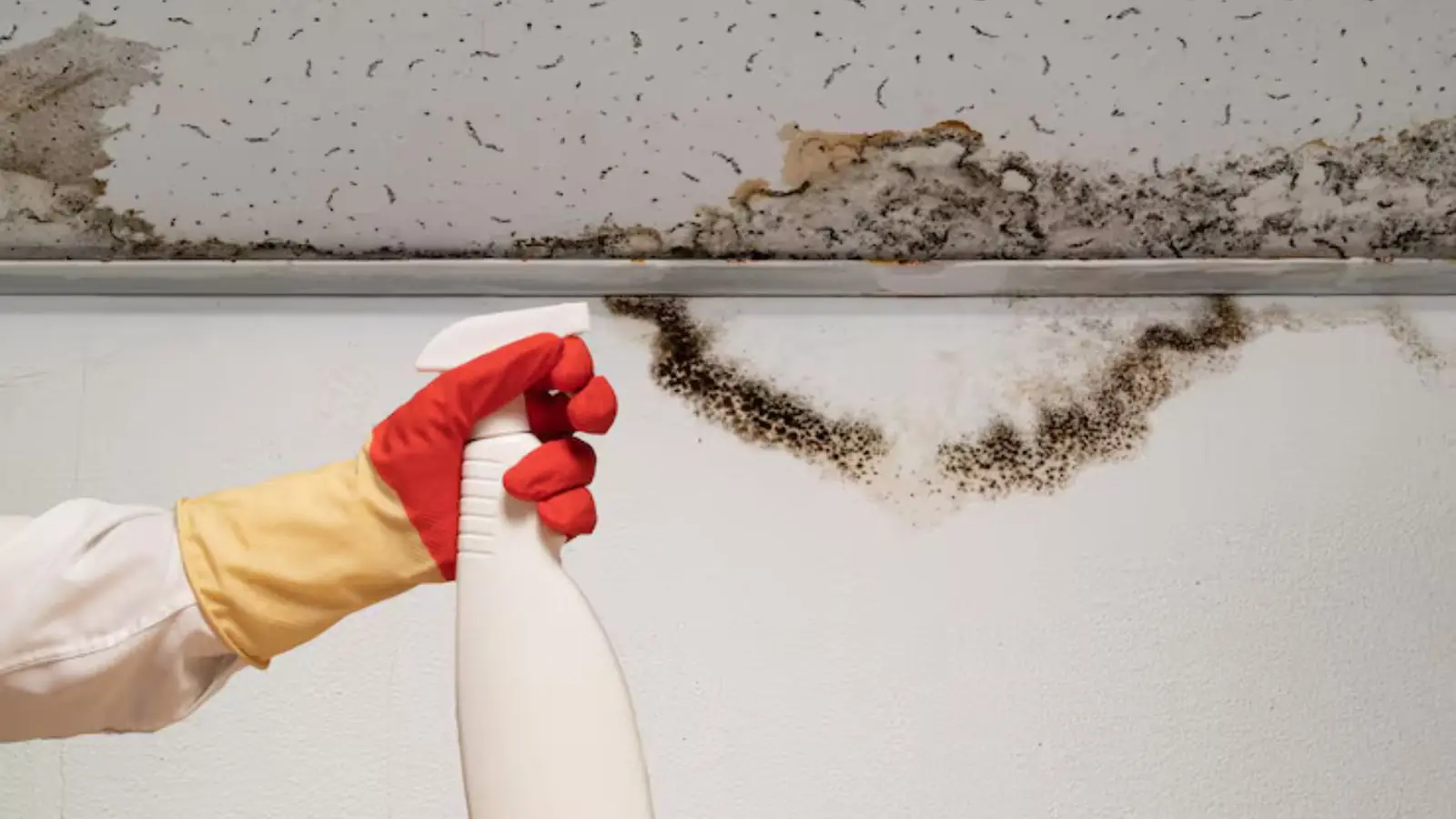
Black mold on a ceiling is a moisture story first and a cleaning story second. Dark patches mean the ceiling material has stayed damp, usually because of a roof leak, a plumbing line above, a bathroom fan that vents into the attic or condensation on a cold surface. Cleaning the patch without finding the water only buys a few weeks.
This guide covers the common causes, a simple way to trace the source and the moments when a crew should take over. Mold itself is covered on the mold remediation page, and the rebuild after drying sits under water damage repair.
Why a Ceiling Turns Dark
A ceiling is a surface that hides what is above it. Paint and drywall paper give mold a food source, and a slow supply of moisture gives it the water. Three situations account for most of the dark patches homeowners report.
The first is a leak from above, such as roof flashing, a plumbing joint or an upstairs tub. The second is humid air that reaches a cold surface and condenses, which is common in bathrooms and in rooms under poorly ventilated attics. The third is a damp attic that sends moisture down through the drywall.
| Where the dark patch is | Likely cause | What to check first |
|---|---|---|
| Corner where a shower wall meets the ceiling | Steam with weak ventilation | Fan airflow, fan duct and where it exhausts. |
| Ring-shaped patch with a brown edge | Intermittent leak from above | Roof flashing, plumbing above, attic insulation. |
| Dark spots along an exterior wall line | Condensation on a cold surface | Insulation gaps, air leaks, indoor humidity. |
| Patch beneath an upstairs bathroom | Supply line, drain or tub seal | Access panel, shutoff valves, caulk. |
| Patch under an attic air handler | Condensate line backing up | Drain pan and drain line. |
How to Trace the Source
Look above the stain
Go into the attic or the floor above and look for wet insulation, a damp roof deck or a stained pipe. Take a flashlight and photos.
Test the fan
Hold a tissue to the bathroom fan. If it barely moves, the duct may be blocked or crushed, and steam stays in the room.
Check the weather link
Note whether the stain grows after rain, after showers or only in cold weather. Each pattern points to a different source.
Use a moisture meter
A meter reading on the ceiling tells you if the drywall is still wet. A crew can also use thermal imaging to see wet areas you cannot see.
What Not to Do
Do not paint over the patch, because paint seals in moisture and the stain returns. Do not scrape or sand dry growth, since that spreads it through the room. Do not point a fan at it, and do not spray a strong cleaner on drywall that is still wet.
If the ceiling is sagging, bulging or dripping, keep out from under it. A saturated ceiling can come down, and that is both a safety issue and an emergency call.
Reading the Stain Before You Touch It
The shape of a ceiling stain carries information. A round or oval patch with a darker ring at the edge usually comes from water that arrived, spread and dried more than once. A long streak that follows a joist line often tracks a pipe or a roof seam. Spots clustered in a corner point to condensation or a duct that dumps humid air into the ceiling cavity.
Photograph the patch with a ruler or coin beside it for scale, and note the date. A week later, photograph it again from the same spot. Comparing the two photos tells you whether the patch is growing, stable or drying out, and it gives a crew a useful history when they arrive.
Rooms Where Ceilings Suffer Most
- Bathrooms with a fan that is undersized, clogged or vented into the attic instead of outdoors.
- Rooms under a flat or low-slope roof section, where water has little pitch to run off.
- Top-floor ceilings below an attic that has gaps in insulation and air sealing.
- Kitchens and bathrooms directly below an upstairs tub, shower or laundry.
- Ceilings near a chimney or a skylight, where flashing has to hold up through freeze and thaw.
None of these means a ceiling is doomed. It means the first place to look when a patch appears is the part of the house that sits above it, not the paint on the surface.
What to Do Before the Crew Arrives
If the ceiling is dry and stable, keep the room ventilated, run a dehumidifier and photograph the patch. If the ceiling is wet, move furniture out from under it and put a bucket below any drip. Do not poke a hole to release trapped water unless a professional tells you to, because a bulging ceiling can collapse in one piece.
Turn off any light fixture or fan on a wet ceiling at the breaker, and leave the room until a qualified person has checked it. According to EPA guidance on mold in the home, controlling moisture is the key to controlling mold, and that is the right order of work here too.
Call the dispatch line and describe the stain. A crew can inspect for moisture and explain the scope before any work starts.
Danvers Local Note: Storms, Roofs and the Town
The town's climate resilience plan lists flooding, heat stress and intense storms as physical climate risks for existing buildings, which includes roofs and attics. A storm-driven roof leak that reaches a ceiling is the same sequence described above, only faster.
Roof and ventilation repairs fall under the Massachusetts State Building Code, which the Danvers Inspectional Services office enforces. Ask that office whether your repair needs a permit, and ask your roofer to name the permit they will pull.
Sources: Town of Danvers resilience site and Danvers Inspectional Services page (municipal sources).
When a Crew Should Take Over
Call a crew when the patch is larger than a hand, when drywall is soft, when more than one room is affected or when a musty smell lingers after you fix the source. Those signs mean water has reached the material behind the paint.
Neighbors in Beverly and Middleton see the same ceiling patterns after wet seasons, and the same dispatch line covers them. Questions about health and mold belong with your physician, and the crew deals with the water and the material.
Questions About Ceiling Mold
Color does not tell you what kind of mold you have, and nobody can say from a photo. Treat any ceiling growth as a sign of moisture, find the source and have a crew look if it is larger than a hand or the drywall is soft. Health questions belong with a physician.
Bleach does not soak into drywall or paint, so growth can remain below the surface. A small spot on a hard, sealed surface can be cleaned with detergent and water, but a soft or stained ceiling needs a closer look.
It can. Cold winters mean warm, humid indoor air meets cold surfaces under attics and along exterior walls, and condensation follows. Better bathroom ventilation and attic insulation reduce it, and a moisture meter confirms whether a ceiling is actually damp.
Mold can start in wet materials within a few days. Fast drying of a fresh leak is the best prevention, which is why finding the source quickly matters.