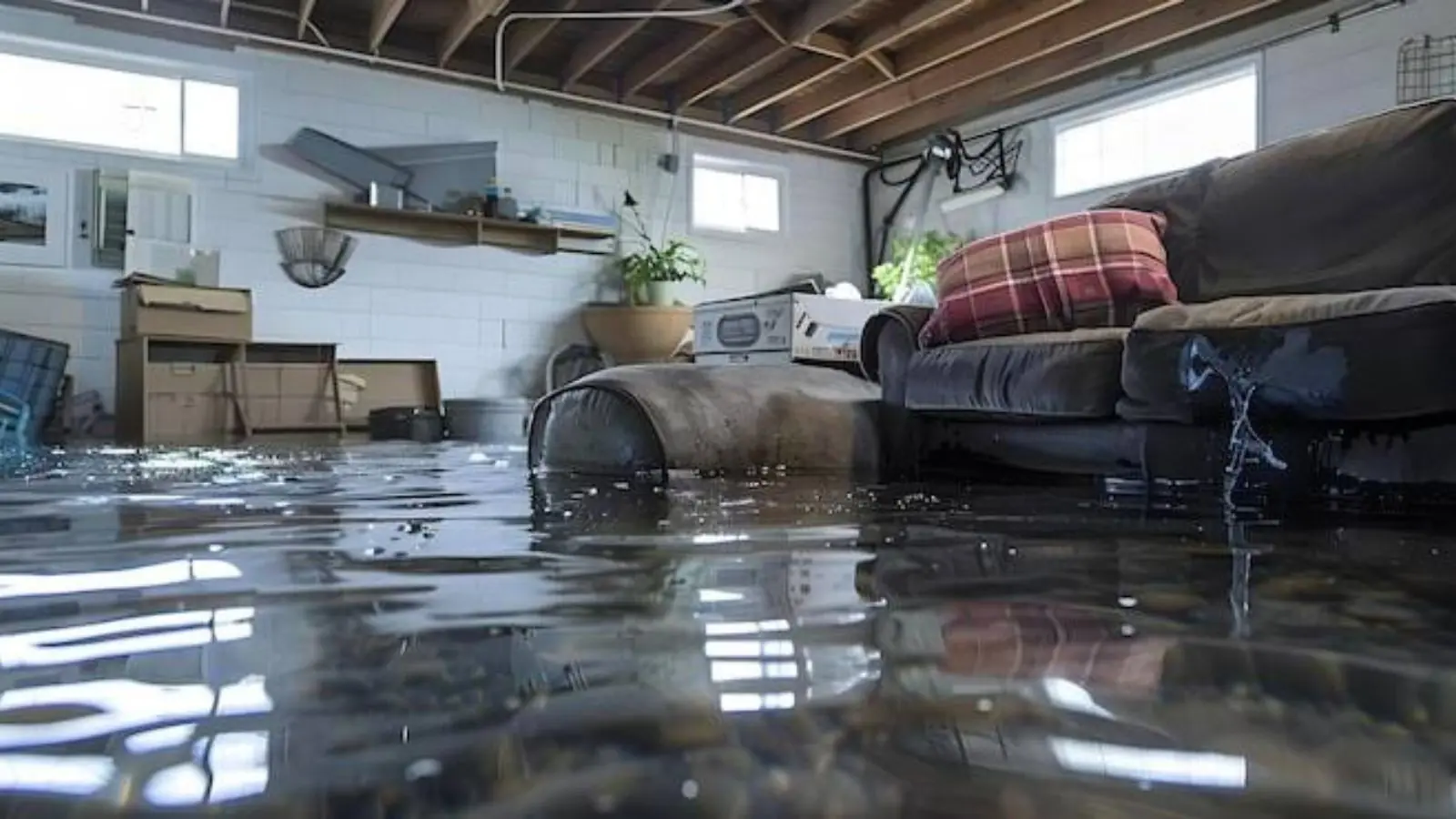
Flood damage restoration in Danvers is an emergency job because floodwater is rarely clean and the structure starts absorbing it at once. The 24/7 dispatch line sends a crew for basement flooding, storm water and sewage backups. While you wait, stay out of the water, keep power off in any flooded room and move what you can to higher ground.
When Floodwater Is an Emergency
A flooded basement is an emergency even when the water looks calm. Outdoor floodwater carries soil, sewage and runoff from roads, so it counts as Category 3 water under the S500 standard. Anything porous that it touched, such as carpet, insulation and drywall, usually has to come out instead of being dried.
Furnaces, water heaters, panels and washers often sit low in a Danvers basement. If water is near any of them, cut power only from a dry panel and call the utility or 911 about any gas or electrical risk before calling restoration. Night and weekend calls are routine for this work.
Flood Exposure in Danvers
Danvers has two rivers on its edges. The tidal Danvers River forms in the southeast corner where the Porter, Crane and Waters rivers meet, and the Ipswich River follows the western border. A storm that lines up with a high tide can push water up the tidal side, while heavy rain can lift the Ipswich River over its banks.
Essex County was designated for FEMA Individual Assistance after the May 2006 storms and flooding, which is a reminder that river and rain floods reach this part of Massachusetts. The town adopted a revised Floodplain Bylaw at its February 2025 Special Town Meeting, aligned to FEMA rules.
Your own risk depends on your address. Use the FEMA Flood Map Service Center, ask the town Engineering Division or Inspectional Services about your property, and check your insurance before the next storm.
| Flood source | Water category | Usual response |
|---|---|---|
| Rain and groundwater seeping into a basement | Category 3 in most cases | Extraction, removal of wet porous materials, drying. |
| River or tidal surge | Category 3 | Protective gear, removal of soaked materials, sanitizing. |
| Sewer or drain backup | Category 3 | Sealed removal, disinfecting, deodorizing. |
| Sump pump failure | Category 2, sometimes 3 | Extraction, cleaning, drying, sump repair by a plumber. |
Basement Flooding Cleanup
Basement flooding cleanup begins with the water level and the water type. Pumps drop the level in steps so the foundation walls are not stressed by sudden pressure changes. Then crews remove wet carpet, pad, lower drywall and insulation, wash hard surfaces with an antimicrobial cleaner and start drying.
Finished basements take the most work, because carpet, framing, paneling and stored boxes all hold water. Crawl spaces and slab-level rooms follow the same sequence, though a crawl space often needs access panels opened and a vapor barrier checked after the water leaves.
Restoration is not waterproofing. If water keeps arriving through the foundation, a waterproofing contractor or a drainage specialist solves the cause, and restoration repairs the damage it left.
Call the 24/7 line from upstairs, describe the water and tell the dispatcher about any gas or power concerns.
Sewage Backup Cleanup
A sewage backup is Category 3 water and a safety job first. Do not wade in it, do not run fans through it and do not use household cleaners on it. Crews wear protective equipment, remove porous materials the sewage touched, sanitize hard surfaces and treat the air for odor.
If the backup comes through a basement drain or toilet, check with the town about whether the problem sits in the public sewer or in your own line. Your insurer can tell you whether a water backup endorsement applies, because the Massachusetts Division of Insurance notes that sewer and water backup coverage usually comes by endorsement.
Flood Damage and Your Insurance
The Massachusetts Division of Insurance states that standard homeowners policies do not cover flood damage. Flood coverage is a separate policy, and sump pump failure or water backup is an endorsement you add on purpose.
Read the declarations page of your policy and ask your insurer which coverages were in force on the date of loss. Photos, the written scope and moisture readings help document what happened. Nearby town pages for Salem and Peabody explain how flood exposure differs across the North Shore.
What Drives Flood Restoration Cost
- The depth the water reached and how long it stayed.
- Whether the water counts as Category 2 or Category 3.
- How much finished space the flood touched, such as carpet, paneling or built-ins.
- The drying days needed after the cleanup ends.
- The rebuild scope, which is priced after the structure is dry. After drying, water damage repair rebuilds what had to be removed.
Scope and price are explained before work starts.
Questions About Flood Damage Restoration
Yes. The dispatch line is answered 24 hours a day, and floods often arrive during storms at night, so after-hours calls are routine. A crew is sent as soon as one is available.
Treat it as contaminated. Floodwater from outside carries soil and sewage, and basement water can sit near electrical equipment. Stay out of it and let a crew with protective gear handle removal.
Porous materials that touched Category 3 water, such as carpet, pad, insulation and drywall, usually come out. Solid framing, concrete and some hard surfaces can be cleaned and dried in place.
Standard homeowners policies in Massachusetts do not cover flood damage, according to the state Division of Insurance. Flood coverage is a separate policy, so check your declarations page.
Search your address on the FEMA Flood Map Service Center and ask the town about your property. Your insurer can also tell you how it rates your location.
Restoration repairs what the flood damaged. A plumber, drainage contractor or waterproofing specialist fixes a failing sump pump, drain or foundation leak.