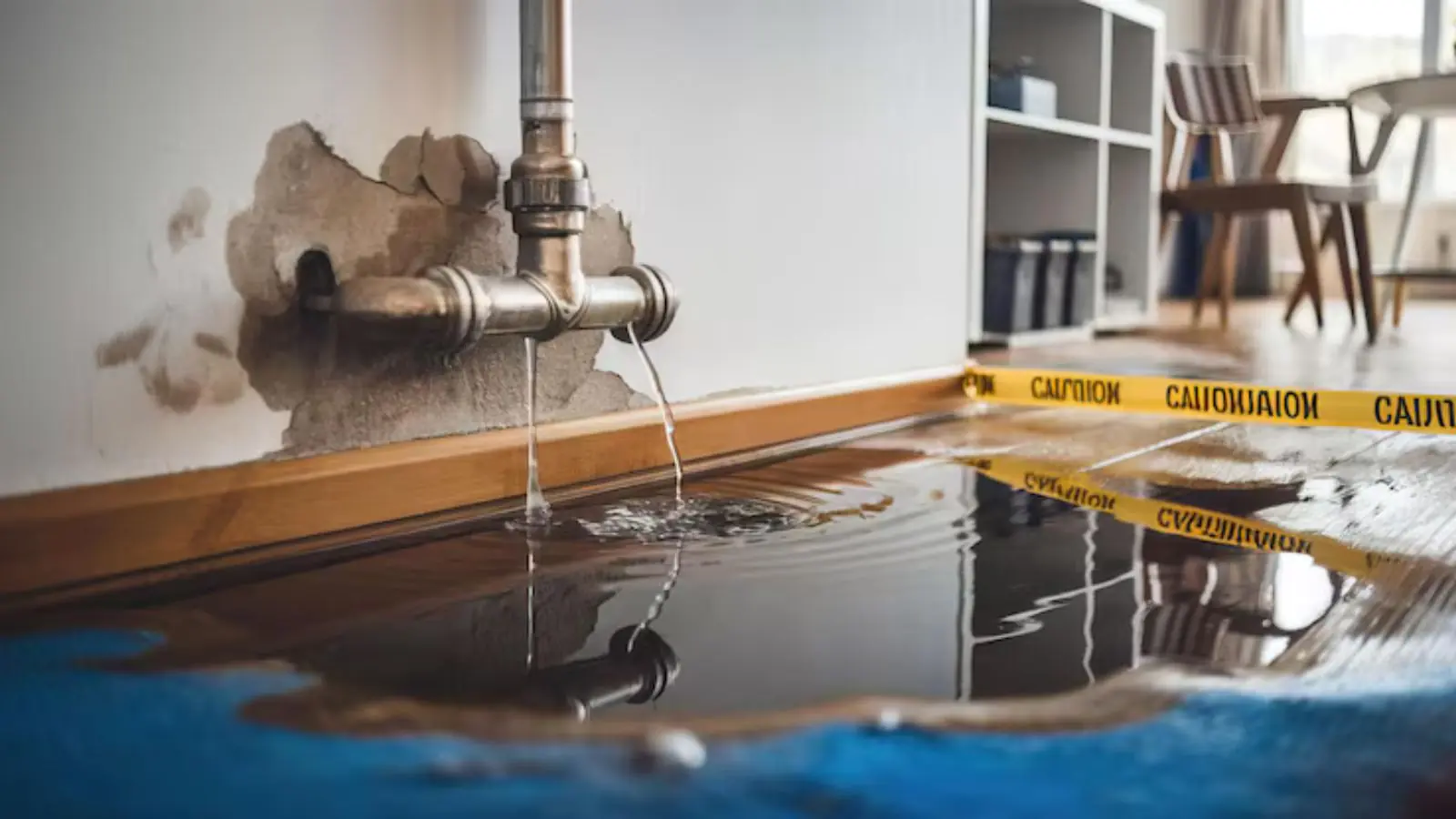
Water mitigation in Danvers means limiting the damage in the first hours after a leak or flood, and it is time sensitive from the first minute. The 24/7 line sends a crew to find the moisture, remove what cannot be saved and set up drying equipment. While you wait, shut off the water source, keep foot traffic off wet carpet and open cabinet doors under a leaking sink.
Wet Walls, a Musty Smell or Carpet That Will Not Dry?
People rarely search for the trade name. They search for a baseboard that feels damp, a ceiling stain that keeps growing or a basement smell that returns after cleaning. All of those point to water still trapped in a material, and the fix for trapped water is water mitigation.
It combines moisture detection with controlled drying, so the damp is removed from the structure itself, not just from the surface you can see.
What to Do Before the Crew Arrives
- Shut off the water source and, from a dry spot, the power to wet areas.
- Lift furniture legs and rugs off wet floors and open interior doors for airflow.
- Photograph the damage and write down what was wet and when.
- Do not use a household vacuum on water, and do not run heat at high settings.
Why the First 72 Hours Matter
Wet drywall and insulation can start to fail within a day or two, and framing and subfloor stay damp far longer than the paint on top suggests. In a closed-up New England house during heating season, there is little airflow to carry moisture away, so dampness lingers.
Mitigation shortens that window. A crew that arrives the same day, when available, can often dry in place what would be torn out after a week of waiting.
Stop the source
A shutoff, a roof tarp or an appliance disconnect keeps new water from arriving while the crew works.
Extract standing water
Pumps and extraction units remove the bulk of it. This links to emergency water removal when the loss is deep.
Map the moisture
Meters and thermal imaging trace water through walls, ceilings and floors, and a sketch records each reading.
Remove what cannot dry
Saturated pad, soaked insulation and badly swollen drywall come out so they cannot hold water against the framing.
Set the drying equipment
Air movers and dehumidifiers go in, placed by the moisture map and not by guesswork.
Structural Drying
Structural drying is the part of mitigation that takes days. Air movers push dry air across wet surfaces, and low-grain-refrigerant dehumidifiers pull the vapor out of the air so it is not simply moved to another room. Cold basements sometimes call for desiccant units, which work at lower temperatures.
Drying is measured, not assumed. The crew returns to read the meters each day, moves equipment as areas dry, and stops only when every material reaches its dry standard. A house that feels dry by hand can still be reading wet inside a wall.
Drywall, plaster, hardwood and subfloor all dry at different speeds, which is why the equipment stays longer than most homeowners expect.
| Drying class | What it describes | Example |
|---|---|---|
| Class 1 | Little water absorbed, low evaporation load | A small leak on a few feet of floor. |
| Class 2 | Whole room affected, carpet and pad wet | Washer hose leak across a bedroom. |
| Class 3 | Water came from above, walls and ceiling saturated | Ceiling soaked by an upstairs line. |
| Class 4 | Deep saturation in dense materials | Hardwood, plaster or concrete held wet for days. |
Call the dispatch line and ask for moisture mapping. A crew can be sent the same day when one is available.
Where Mitigation Fits in the Whole Job
Mitigation comes first, then cleanup and repair. After the water is stopped and the structure is drying, water damage cleanup handles debris and sanitizing, and water damage repair rebuilds finishes once readings are dry.
Skipping straight to repair is the common mistake. Paint over damp drywall and the stain returns, while mold gets a head start. If water has been sitting in a home near the Danvers River in Danversport, the same sequence applies, and the FEMA Flood Map Service Center shows whether your address sits in a mapped flood zone.
What Shapes the Cost of Mitigation
Factors the scope accounts for
- How many rooms and how many square feet read wet on the moisture map.
- The water category, which decides how much has to be removed instead of dried.
- Whether the wet material is thin and quick to dry or dense and slow.
- The number of drying days until the meters read dry.
- How much equipment the layout needs, since a divided floor plan needs more air movers than an open room.
Scope and price are explained before work starts. Neighbors in Middleton and Topsfield reach the same dispatch line.
Insurance Notes for Mitigation
Insurers often want mitigation to start quickly, and many policies expect you to prevent further damage after a loss. Keep photos from before anything moves, daily moisture readings and the equipment log, since they show what was wet and when it dried.
Check your policy and ask your insurer what it covers. Sudden and accidental water damage is often covered, and gradual leaks often are not.
Questions About Water Mitigation
Yes. The dispatch line answers around the clock, and a mitigation crew is sent as soon as one is available, including nights and weekends.
Carpet pad and the subfloor below it hold water that a towel or wet vacuum cannot reach. Mitigation uses meters to find it and extraction and drying equipment to remove it.
Mitigation limits the damage in the first hours and days by stopping water, removing wet materials and drying. Restoration is the whole job, including the rebuild after the structure is dry.
Many jobs run three to five days, but dense materials and large areas take longer. The crew reads meters each day and removes equipment only when readings are dry.
Household fans move air but do not map or measure moisture, and a small dehumidifier cannot handle a wet room. They help while you wait, but they rarely dry wall cavities and subfloors fully.
ANSI/IICRC S500 is the published standard for water damage restoration. You can ask any company whether its crews work to it.