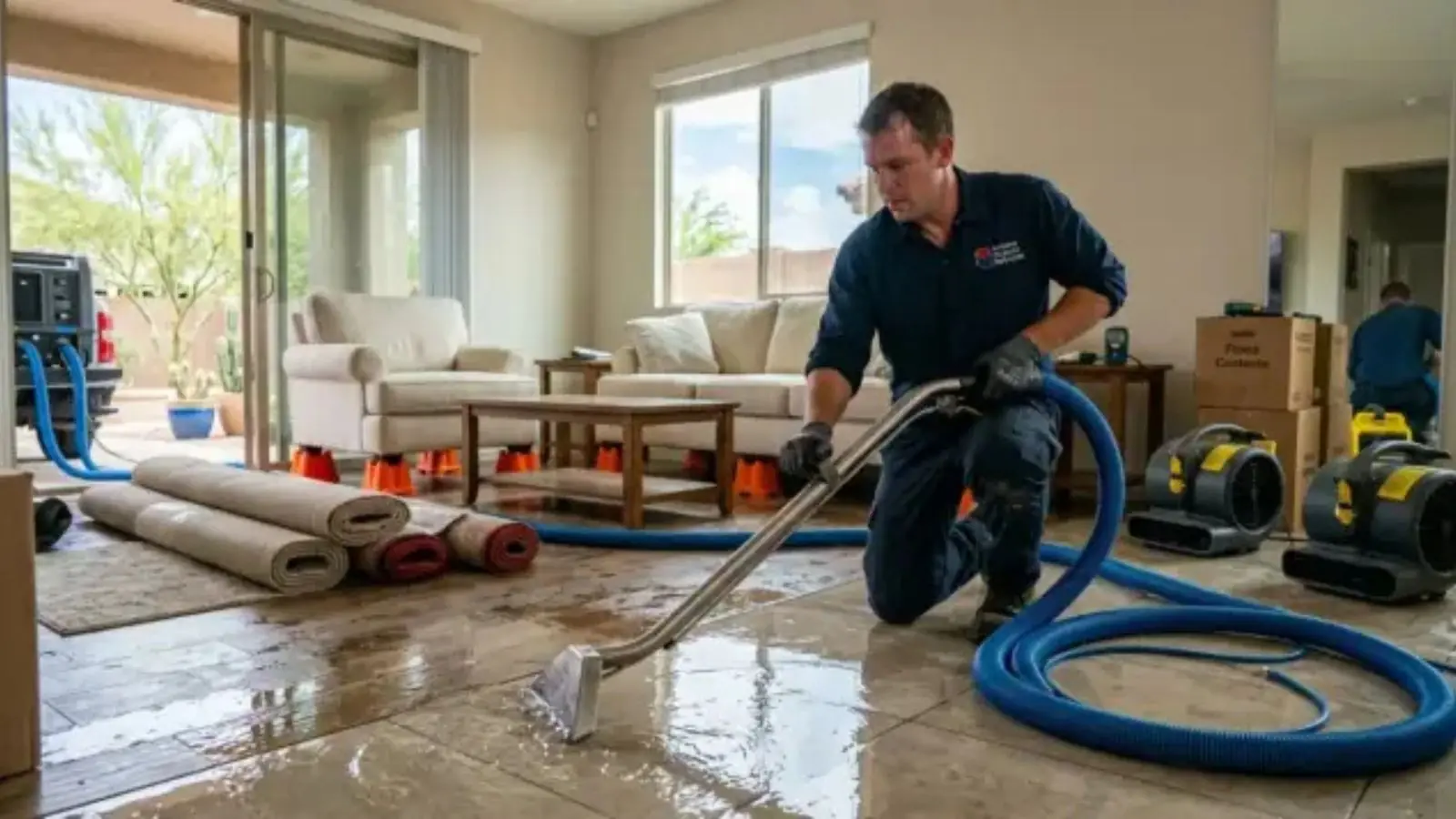
Emergency water removal is the first job on a flooded floor, and in Danvers it starts with one call. The 24/7 dispatch line sends a restoration crew with pumps and extraction units, and while you wait you can close the nearest shutoff valve, switch off power to the wet area from a dry spot only, and lift valuables out of the water.
Every hour that water sits on carpet, drywall and subfloor lets it travel farther. Pulling it out quickly is what keeps a manageable loss from turning into a rebuild.
When Standing Water Is an Emergency
Water on the floor is an emergency when it keeps coming, when it is deeper than an inch or two, or when it has reached carpet, a finished basement or an appliance. A broken washing machine hose, a failed water heater, an overflowing toilet and a pipe that let go inside a wall all fit that description.
Night calls are normal. Water does not wait for business hours, so the after-hours line is the same line, answered the same way, on weekends and holidays.
Safety comes before the cleanup
If water is touching an outlet, a power strip, a panel or anything plugged in, do not step in it. Cut power only if the panel is dry and you can reach it without crossing water. Call the utility or 911 about any electrical or gas concern before you call the restoration line.
If the water came up through a floor drain or toilet, treat it as sewage. Keep children and pets out, and wait for a crew with protective gear.
How the Water Comes Out
Find and stop the source
The crew confirms the water has stopped, because pumping while a line is still running only buys a few minutes.
Choose the equipment by depth
Submersible pumps handle deep water. Portable and truck-mounted extraction units pull water out of carpet and pad. Wet vacuums finish edges and tight corners.
Map where the water went
Moisture meters and thermal imaging show water inside wall cavities and under flooring that looks dry on top.
Hand off to drying
Extraction removes bulk water. Air movers and dehumidifiers take over to pull out the moisture that remains in the materials.
| Water depth | Typical equipment | What follows |
|---|---|---|
| Damp carpet, no pooling | Portable extraction unit and wet vacuum | Lift carpet edge, check the pad, start drying. |
| Pooled water under an inch | Extraction unit with a wand, plus air movers | Pad removal if saturated, wall readings. |
| Water over an inch | Submersible pump, then extraction unit | Baseboard removal, cavity checks, full drying plan. |
| Water from a sewer or drain | Pump and sealed removal with protective gear | Sanitizing and removal of soaked porous materials. |
Once the bulk water is gone, the next step is water mitigation, which dries the structure and prevents the loss from growing. Flooding that arrives from outside the house, such as a rain surge into a basement, is covered on the flood damage restoration page.
Burst Pipe Water Damage
Pipes burst for two common reasons in New England homes. Water inside a pipe freezes and expands during a cold snap, or an old line fails at a joint under normal pressure. Either way, water can pour into a wall or ceiling for a long time before anyone sees a stain.
Close the main shutoff for the house first, then open a low faucet to drain the lines. Photograph the area before moving anything, and note the time you found it. Water on your side of the meter is your plumbing to shut off, while a break in the street belongs to the town DPW Water Division.
Crews look behind the burst for wet insulation and drywall. A pipe in an exterior wall often leaves the room sound while the cavity holds water, so readings matter more than the surface.
Call the line, describe the source, and a crew is sent as soon as one is available. After-hours calls get the same response as daytime calls.
Why Danvers Homes Face Sudden Water Loss
Danvers has the tidal Danvers River on its southeast side and the Ipswich River along its western border, and the town describes itself as coastal with many properties in flood zones. A homeowner in Danversport and a homeowner on one of the hills near Endicott Park can face very different water, so the first question on every call is where the water is coming from.
Look up your address on the FEMA Flood Map Service Center. If it falls in a mapped flood zone, ask your insurer now whether you carry flood coverage, because a standard homeowners policy does not.
What Affects the Price of Water Removal
Five things that set the bill
- The depth and spread of the water, which decide how many pumps and extraction units run.
- The water category, since sewage and floodwater need protective work that clean supply water does not.
- The materials soaked, because carpet pad is removed while solid hardwood may be dried.
- Whether removal happens at night or on a weekend, when a crew is pulled out of its schedule.
- How much drying equipment is needed after extraction ends.
Scope and price are explained before work starts, so you decide with the facts in front of you. No exact figures appear here because every loss reads differently on the moisture meter.
Insurance and Water Removal
Sudden and accidental water damage, such as a pipe that bursts, is often covered by a homeowners policy. Slow leaks and long neglect often are not. Flood damage is usually excluded and needs a separate policy.
Check your policy and ask your insurer what applies. Photos, the time you found the water and the written scope of work are the documents they usually ask for. Neighbors in Peabody and Beverly call the same line for the same reasons.
Questions About Emergency Water Removal
Yes. The line is open 24 hours a day, every day, including holidays. A night call is answered the same way as a daytime call, and the crew is sent as soon as one is available.
As soon as it safely can. Water starts moving into drywall, baseboards and subfloor within hours, and the longer it sits, the more material has to be removed instead of dried.
A wet vacuum helps on a small clean spill, but it cannot pull water out of carpet pad, wall cavities or a subfloor. Never use a household vacuum near wet outlets, and never use one on sewage.
Treat it as contaminated. Keep people and pets out, do not try to clean it up yourself, and tell the dispatcher so the crew arrives with the right protective gear.
Extraction is the first step. Drying, moisture checks and any needed removal of soaked materials follow, and each step is explained in the scope before work starts.
It depends on the cause and on your policy. Sudden and accidental losses are often covered while flood damage usually is not. Ask your insurer and keep every photo and invoice.