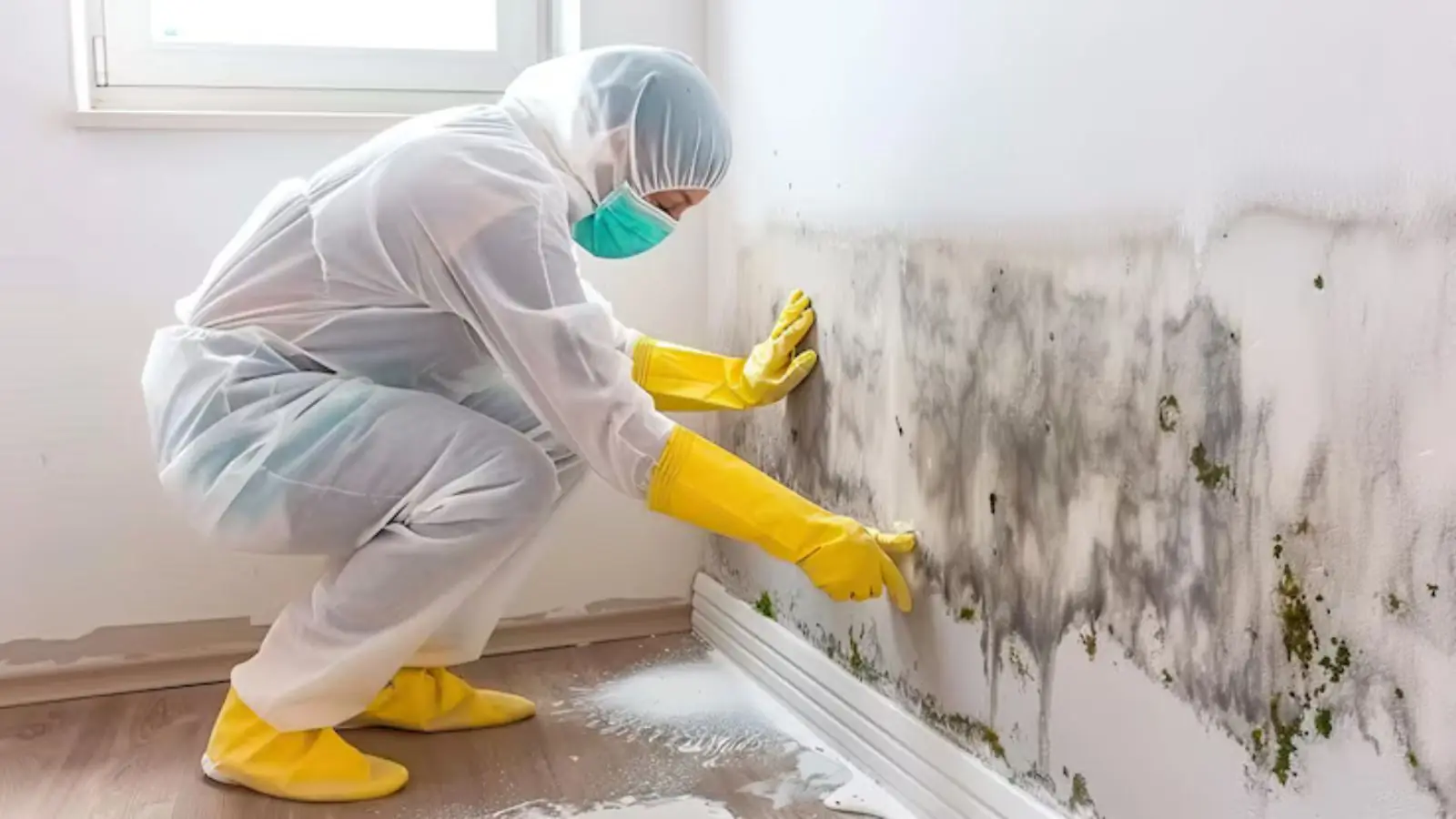
Mold remediation in Danvers is the controlled removal of mold and the drying and cleaning that stop it from returning. It is a secondary service to water damage work, because mold nearly always follows moisture. The dispatch line answers 24 hours a day, and an inspection is the first step before any scope is written.
Spots on the Ceiling, a Musty Closet or a Smell Near the Basement Stairs?
People describe mold by its signs. A dark patch where a shower wall meets the ceiling, a closet that smells stale after a roof leak or a damp smell near the basement stairs all point to moisture that has stayed too long. Surface spots are only what shows. The material behind them may be wet.
The trade name for the fix is mold remediation, and it always includes finding and drying the water source.
How Mold Remediation Works
Find and fix the moisture
A leaking toilet line, a failed roof flashing, an air conditioner drain or poor ventilation feeds mold. Remediation does not work until the source is repaired.
Contain the area
Plastic sheeting and negative air pressure keep spores from drifting into the rest of the house while work continues.
Remove affected materials
Porous materials such as drywall, insulation and carpet are cut out and bagged. Solid framing is cleaned.
Clean and filter
HEPA vacuums and damp wiping clean surfaces, and filtered air machines clear the work zone.
Dry and verify
Meters confirm the area is dry, and a visual check or clearance test confirms the work is finished.
Mold Testing and Inspection
An inspection looks for visible mold, moisture and the cause. Sampling can measure spores in the air or on a surface, but a lab number never replaces finding the leak. Many mold calls start with a plain question, such as whether a spot is mold at all, and a visual inspection plus a moisture meter answers it fastest.
Clearance testing is done after remediation by someone who did not do the work, so the person checking is independent of the person who cleaned. If you are buying or selling a home and a lender is waiting on mold removal, ask the lender what documentation it accepts before work begins, because acceptance is the lender's decision.
| Situation | Typical next step |
|---|---|
| Small spot on a hard surface after a short leak | Fix the leak, clean with a detergent solution, dry fully. |
| Spots on drywall or ceiling after a long leak | Inspect for moisture, cut out affected board, contain and clean. |
| Musty smell with no visible mold | Moisture inspection behind walls, under floors and in the basement. |
| Mold found during remodeling | Stop demolition, contain the area and assess the scope. |
| Sale or loan requires mold removal | Written scope, remediation, independent clearance testing. |
Call the dispatch line and describe where it is and where water has been. A crew schedules an inspection.
Mold After Water Damage
Mold can start growing in wet materials within a few days, and a flood, a leak or a long humid spell gives it what it needs. This is why water damage and mold calls overlap. A closet wall that got wet from a roof leak, a finished basement ceiling under a leaking toilet line or a carpet pad that stayed damp all show the pattern.
Early drying is the simplest mold prevention. If a loss is fresh, water mitigation can dry the structure before spores take hold. If the damage is older, remediation and water damage repair come in sequence, with cleanup in between.
Mold Removal and Black Mold Cleanup
Color does not tell you what kind of mold you have. Black, green and white growth all need the same response: stop the moisture, remove or clean the affected material and dry the area. Calling it black mold does not change the steps.
EPA guidance treats a patch of about ten square feet or less as something many homeowners handle, with gloves and a mask and with the moisture fixed first. Larger areas, mold inside walls, mold spread across several rooms or mold after sewage or flood water belong with a trained crew. Bleach does not reach into porous materials and is not the answer for drywall or wood.
What to Do While You Wait for a Crew
- Fix or shut off the water source so the area stops getting wetter.
- Keep the room ventilated and run a dehumidifier if you have one.
- Do not disturb or sand visible growth, and do not blow air across it.
- Keep children and pets out of the area and photograph the damage for your records.
Standards and Licensing
ANSI/IICRC S520 is the published standard for mold remediation, and it is reasonable to ask any company whether its crews work to it. Ask too whether your state licenses mold work and whether the company holds any license that applies.
Questions about health and mold exposure belong with your physician. Remediation removes mold and moisture, and it does not diagnose anything.
What Affects Mold Remediation Cost
What the written scope reflects
- The size of the area and how far the moisture spread behind the surface.
- Which materials must be removed, such as drywall, carpet or insulation.
- The containment level needed for the space.
- Whether the source repair, such as a roof or plumbing fix, is a separate job.
- Any clearance testing requested for a sale, a loan or your own records.
Scope and price are explained before work starts. Homes in Peabody and Beverly use the same line for mold calls.
Insurance and Mold
Insurers often treat mold by its cause. Mold that follows a sudden, covered water loss may be handled differently from mold that grew from a slow leak or high humidity. Policies differ, and some limit mold coverage.
Read your declarations page, ask your insurer what applies and keep photos, moisture readings and the written scope with your records.
Questions About Mold Remediation
A musty smell usually means moisture is present somewhere you cannot see, such as behind a wall, under a stair or in a damp corner. An inspection with a moisture meter locates it, and fixing the water is the first step.
Bleach does not penetrate porous materials such as drywall and wood, so growth can stay below the surface. For a small spot on a hard surface, a detergent solution and thorough drying works, and larger or hidden mold needs a trained crew.
Yes. Mold needs moisture, and removing it while a leak continues means it comes back. The source is repaired first or in the same job.
It is a check after remediation, done by someone independent of the crew, to confirm the area is clean and dry. If a lender or buyer requires it, ask them what documentation they accept.
Yes, as part of the restoration sequence. Flood and sewage jobs begin with removal and sanitizing, and mold work follows when materials have been wet long enough.
It depends on the cause and on your policy, and some policies limit mold coverage. Read your declarations page and ask your insurer.
ANSI/IICRC S520 is the published standard for mold remediation. Ask any company whether its crews work to it.