Water damage repair in Danvers is the rebuild that follows drying. It covers the drywall, insulation, flooring, trim, paint and cabinets that could not be dried in place. The work starts with a moisture check, because covering damp materials with new finishes brings the stain back.
A call to the dispatch line, which is open around the clock, starts an inspection and a written scope of what needs to be replaced and why.
Repair Starts After Drying
Repair and drying are separate phases. Drying lasts days and removes moisture from framing, subfloor and what is left of the walls. Repair begins when the meters read dry, and a crew confirms that before closing anything up.
If you jump to repair too early, new drywall traps leftover moisture against studs, and paint seals it in. That is how a repaired ceiling shows a ring again a month later. The sequence runs water mitigation, then water damage cleanup, then the rebuild described here.
Ceiling and Wall Water Damage Repair
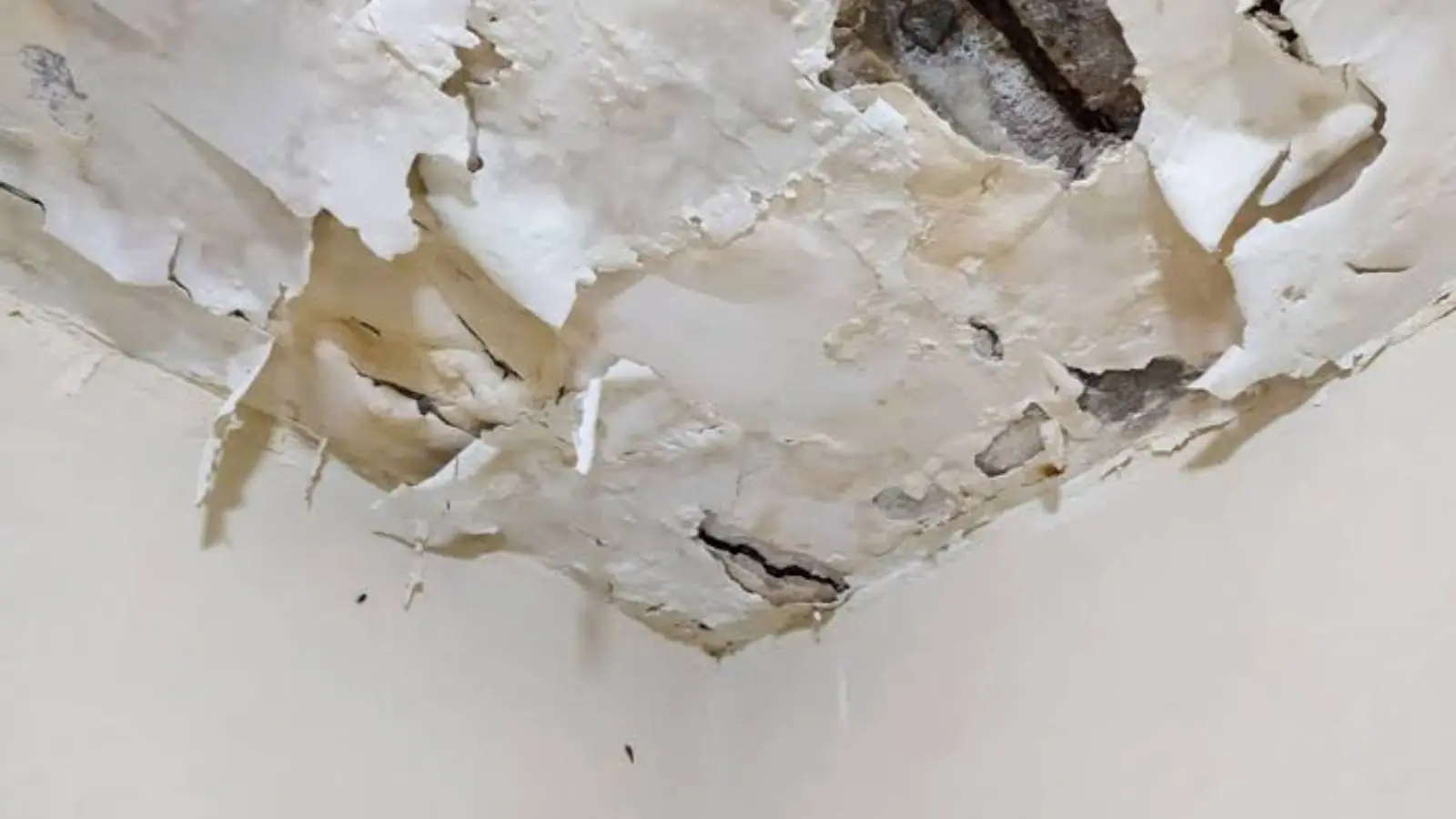
Ceilings and walls announce water damage with bubbling paint, brown rings, a soft spot under a finger or a visible sag. A bathroom ceiling stain under an upstairs fixture, a kitchen wall that took water from a failed siding joint and a roof leak that finally reached drywall are all common scenarios.
The fix starts above the stain. The source, whether a roof, a supply line or a condensate drain, is repaired first. Then wet drywall is cut back past the damp edge, insulation is checked and replaced if needed, and the framing is dried and inspected.
New board is hung and finished, a stain-blocking primer is applied and paint matches the room. A collapsed or bulging ceiling is a safety issue, so stay out from under it and call before touching it.
Hardwood Floors: Cupping and Drying
Cupping happens when the underside of a board absorbs more water than the top, so the edges rise. It shows up after a washer valve breaks, a refrigerator line leaks or an air conditioner condensate line backs up under the floor.
Many cupped floors flatten after slow, measured drying, and sanding and refinishing come after that. Rushing the sanding while the wood is still wet leaves gaps once the boards shrink. Boards that stayed wet for days, or that have started to buckle or stain black, are replaced.
| Material | Usually repaired | Usually replaced |
|---|---|---|
| Drywall | Small stain, dried quickly | Soft, sagging or stained through. |
| Insulation | Dry fiberglass batts | Wet cellulose or any insulation after dirty water. |
| Carpet | Clean water, caught early | Dirty water, or pad that stayed wet. |
| Hardwood | Cupped boards that flatten | Buckled boards or boards with stained wood. |
| Cabinets | Surface moisture only | Swollen particleboard, loose bases. |
| Plaster and lath | Surface stains, dried in place | Crumbling or detached sections. |
Call the line and ask for an inspection. A written scope tells you what is repaired, what is replaced and why.
Permits and Inspections in Danvers
The town Inspectional Services office enforces the Massachusetts State Building Code and reviews permits for repair and alteration work. Replacing a patch of drywall may not need a permit, while structural work, new electrical runs or plumbing changes often do.
Permit rules vary by the work being done, so ask Inspectional Services before the job starts, and expect the contractor to tell you which permits apply. Keep the paperwork, since an insurer or a future buyer may ask for it.
When to Call Before You Start Repairs
- The area has not been confirmed dry by readings.
- You see soft drywall, sagging ceilings or spreading stains.
- Wiring, plumbing or framing is exposed.
- The cause of the water has not been found and fixed.
How Repair Is Scoped and Priced
What goes into a written repair scope
- The list of materials to be replaced, room by room.
- The finishing level, such as paint-ready drywall or full paint and trim.
- Matching work, because a new patch of ceiling often means painting the whole ceiling.
- Flooring choices, which swing the price more than any other item.
- Any permits and inspections the work requires.
Scope and price are explained before work starts, so you can compare it against your insurer's estimate. Homeowners in Middleton and Topsfield use the same dispatch line.
Insurance and the Repair Estimate
Insurers often pay for repair in stages, and they usually ask for itemized estimates, photos and invoices. Sudden and accidental water damage is often covered, while a leak that went unfixed for months often is not.
Check your policy, ask your insurer how it handles matching and depreciation, and keep every document. If the cause was flood, the Massachusetts Division of Insurance notes that standard policies do not cover it.
Questions About Water Damage Repair
As soon as moisture readings come back dry, a crew confirms it and the written scope is approved. Permits, material lead times and your insurer's review can add days.
Paint seals in moisture and does not stop a source that is still active. If the stain returns, the leak or the damp insulation behind it is still there.
Often, yes. Slow drying lets many boards flatten, and sanding and refinishing follow. Boards that buckled or turned black are replaced.
It depends on the work. Structural, electrical or plumbing changes often need one. Ask the town Inspectional Services office before work begins.
The stained section is cut out past the damp edge and replaced. The whole ceiling is usually repainted so the patch does not show.
Water damage repair rebuilds what water damaged. A roofer or plumber fixes the source, and the order matters because repair should not start until the leak is stopped.