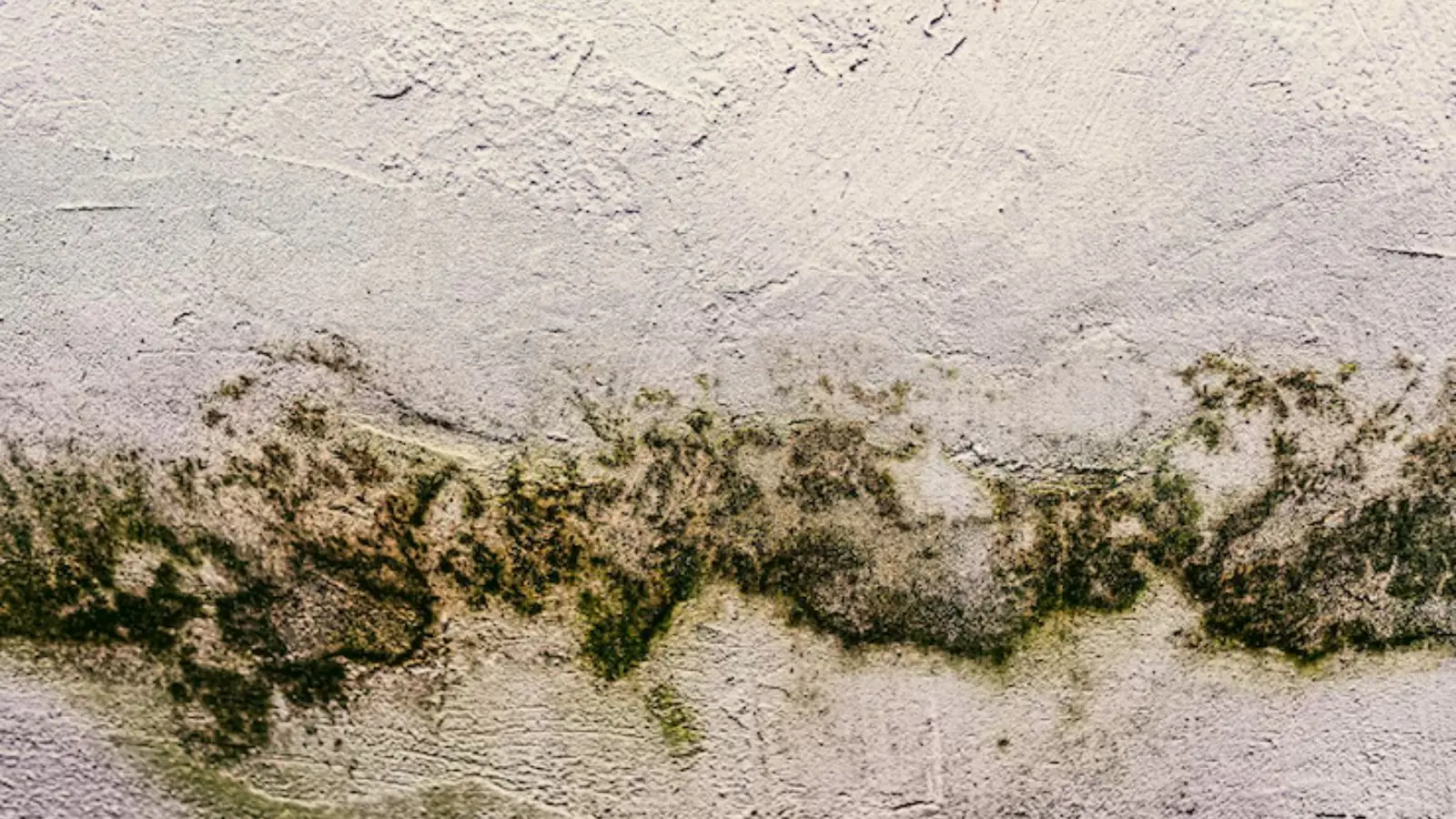
Mildew usually appears as a flat, powdery or downy growth on the surface of a damp material, often white, gray or yellow. Mold tends to look fuzzy, slimy or patchy and can be black, green, blue or white. The names overlap, though, and a photo or color cannot tell you which species you have.
What matters in practice is that both mean moisture has stayed too long. This guide covers the clues that homeowners can see, and why the next step is the same: find the water. The service side is on the mold remediation page, and the cleanup of wet materials is described under water damage cleanup.
Clues You Can See
| Clue | Often called mildew | Often called mold |
|---|---|---|
| Texture | Flat, powdery or downy | Fuzzy, slimy or clumped. |
| Typical colors | White, gray, yellow | Black, green, blue, white, brown. |
| Where it appears | Surfaces such as shower walls, window sills, fabrics | Surfaces and also within materials like drywall. |
| What it does | Stays on the surface in many cases | Can grow into porous material. |
| Smell | Musty | Musty, sometimes stronger. |
These are rules of thumb, not tests. A dark patch could be mold, soot, dirt or staining, and only a lab test can identify a species. Even then, the fix does not depend on the name.
Why the Name Matters Less Than the Cause
Both grow on damp organic material, such as drywall paper, wood, fabric and dust. Without moisture they stop growing. That is why the first question is always where the water is coming from and not what to call the growth.
Common sources are steam in a bathroom, condensation on cold exterior walls, a plumbing leak, a roof leak or humid air in a basement. Locate the cause and fix it, and clean up the growth second.
Look at the location
Growth on grout and caulk in a shower often points to humidity. Growth on a ceiling or inside a wall points to a leak.
Check for softness
Press gently on drywall or wood. Soft material means the growth is more than a surface issue.
Measure moisture
A moisture meter tells you whether the material is still wet.
Decide the scale
About ten square feet or less on a hard surface may be a homeowner job, and larger or hidden growth belongs to a trained crew.
Where Each Tends to Show Up in a House
| Room | What homeowners often find | Usual driver |
|---|---|---|
| Bathroom | Gray or black film on grout and caulk | Steam and weak ventilation. |
| Basement | White or dark patches on walls and stored items | Humid air or seepage. |
| Kitchen | Spots under the sink or behind appliances | Slow leaks. |
| Bedroom closet | Fuzzy spots on shoes or walls | Cold exterior wall and closed doors. |
| Attic | Dark staining on roof sheathing | Warm air condensing on a cold surface. |
Cleaning Choices That Make Sense
For a hard, sealed surface such as tile, detergent and water with a soft brush is a sensible first step. Rinse, dry the area well and watch it for several days. If it stays clean, the surface was the only problem and ventilation changes may keep it that way.
For porous materials such as ceiling tile, carpet or drywall, surface cleaning rarely finishes the job. If the material is stained through or soft, replacing it is the usual path, and the cause of the moisture still needs to be fixed.
Keeping a Record of What You See
Take dated photos of any growth from the same spot, with a coin or ruler for scale. If you later call a crew or speak with an insurer, the photos show how fast the patch changed. Note where the water might have come from, such as a recent storm, a plumbing repair or a spell of humid weather.
A short log of dates, weather and what you did helps a crew narrow down the cause in less time.
What to Do If You Find Growth
According to EPA guidance on mold in the home, you do not need to identify the species to deal with it, and testing is usually not necessary to decide what to do. The practical steps are to find and fix the moisture, then clean or remove the affected material.
If the patch is small and on a hard surface, clean it and keep watching. If it is large, soft or hidden, stop and call. Wear gloves, eye protection and a mask while you work, and keep other people and pets out of the room.
A Quick Summary for Busy Homeowners
- Color and texture are hints and never proof of what is growing.
- Both signal moisture, so the cause matters more than the label.
- Small hard-surface patches can be cleaned, and soft or hidden growth should be assessed.
- Fix the moisture first, clean second and watch the spot afterward.
Call the dispatch line and describe it. A crew can inspect for moisture and explain whether the material needs removal.
Danvers Local Note: Humidity, Seasons and the Water
Danvers sits on tidal water along the Danvers River with the Ipswich River on its western border, and the town describes itself as coastal. Humid summers and cold winters both create the conditions for condensation in basements, bathrooms and under roofs.
The town resilience plan also lists heat stress and intense storms among its physical climate risks. A storm roof leak or a wet summer can set off growth on interior surfaces in the same way.
Source: Town of Danvers resilience site and Wikipedia on Danvers geography (municipal and reference sources).
When Testing Makes Sense
Testing can identify what is growing, but it does not replace finding moisture. Tests are most useful when there is a dispute, such as for an insurance review, a sale or a legal question. Ask who will collect the sample and how the results will be explained, and ask whether the lab is accredited.
Questions about health and mold belong with your physician, and the crew deals with moisture and building materials.
Homeowners in Salem and Peabody see the same patterns near tidal water and brooks, and the same dispatch line covers both. If you cannot find the source, a moisture survey is the next step.
Questions About Mold and Mildew
Color does not tell you what a growth is, and nobody can say from a photo. Treat any growth as a sign of moisture and have it assessed if it is large, hidden or on soft material. Health questions belong with a physician.
Surface mildew on hard materials can usually be cleaned with detergent and water. If it returns, the surface is still damp and the cause needs to be fixed.
A damp, musty smell, a soft surface or growth that spreads suggests mold. A lab test can confirm, but fixing the moisture matters more than the label.
Often not. Improve ventilation, clean the surface and watch it. If growth appears behind tile, in drywall or around a ceiling, have it inspected.