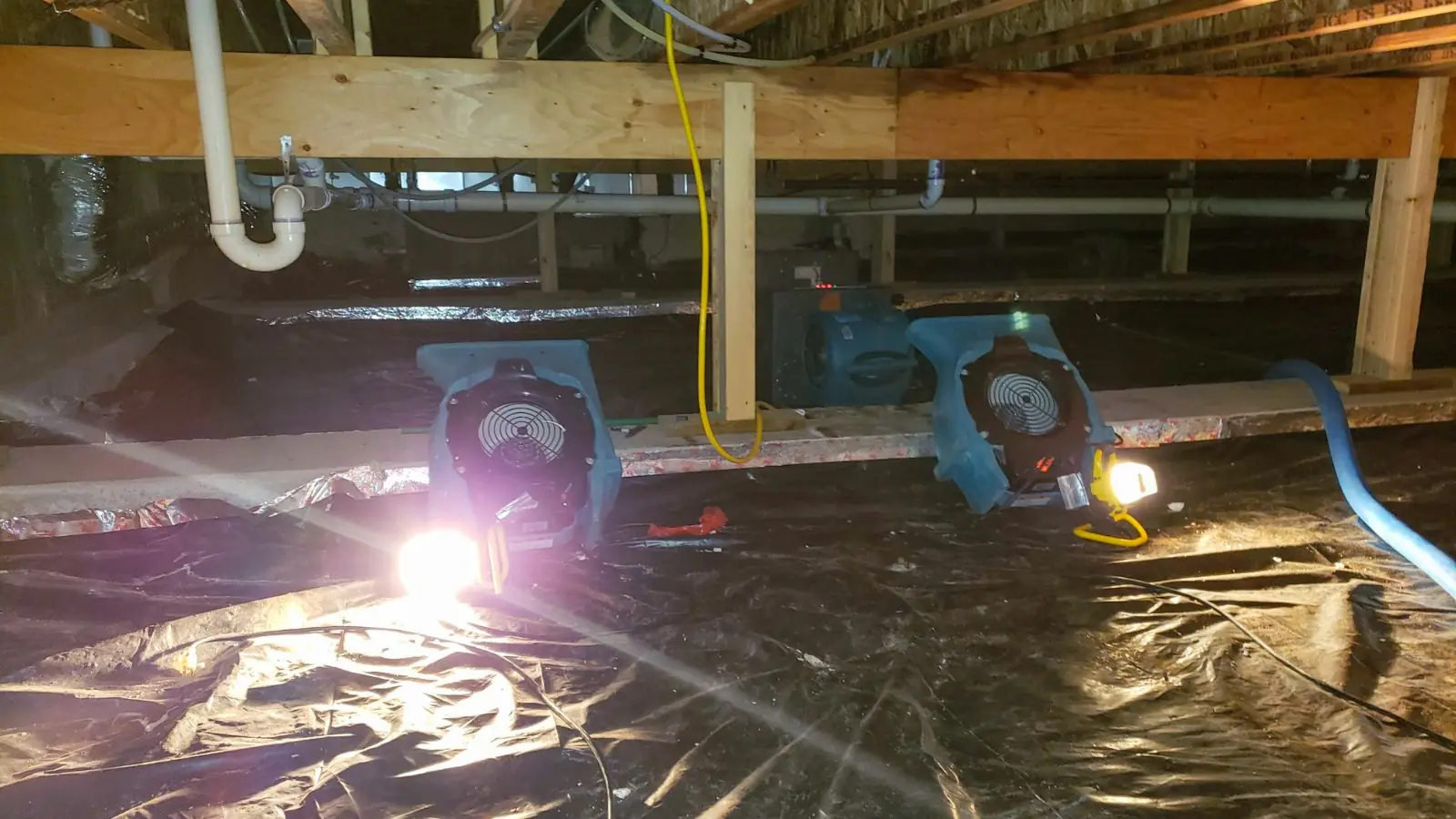
The cost of crawl space mold removal depends on access, the size of the space, how much material is affected, what is causing the moisture and what must be rebuilt afterward. A crawl space with easy entry and a small patch is a different job from a low, wet space with insulation and ductwork overhead.
This article does not quote dollar amounts, because a price without an inspection is a guess. It explains the drivers so you can read an estimate. The service itself is described under mold remediation, and the drying side appears under water mitigation.
What Drives the Price
| Driver | Why it matters |
|---|---|
| Access and height | Tight or low spaces slow every task and require more protective gear. |
| Area and extent of growth | Larger areas take more labor and more disposal. |
| Materials involved | Wood framing can often be cleaned, insulation and vapor barriers are usually removed. |
| Moisture source | If water keeps coming in, drying and repair must be priced in too. |
| Containment and air filtration | Containment barriers and filtration protect the house above. |
| Rebuild and prevention | New vapor barrier, insulation, drainage or ventilation work can change the total. |
Why the Moisture Source Is Part of the Scope
A crawl space can grow mold again after cleanup if water still reaches it. Common sources are poor drainage outside, an uncovered dirt floor, a leaking pipe, open vents that bring in humid summer air or missing insulation that causes condensation.
A crew should tell you what it found and how it will be handled. Ask whether the scope includes drying, a vapor barrier or other moisture control, or whether those are separate items.
Inspect
Check access, extent, wetness, insulation and what is overhead.
Contain
Seal the entry and set air filtration so spores do not travel into the living space.
Remove and clean
Take out affected insulation and materials, clean framing with HEPA vacuuming and damp wiping.
Dry and verify
Dehumidify, then check readings and visible conditions.
Prevent
Address the water source and consider a ground cover or ventilation changes.
What a Crawl Space Inspection Looks For
An inspector checks how a crawl space is built and how it behaves. That includes the height and access, whether the floor is dirt, gravel or a slab and whether a vapor barrier is present. Next comes the condition of insulation, ducts and pipes overhead, signs of past water such as tide lines on the foundation and whether vents are open or sealed.
Moisture readings on framing and floor joists give a picture of how long the space has been damp. Photos of each area are a good request, since you cannot see the space yourself and the photos make the scope something you can discuss.
Ways to Keep Costs Predictable
- Ask for written scope and photographs before agreeing to work.
- Decide up front whether moisture control is part of the job or a separate one.
- Ask how hidden damage found during work will be handled and priced.
- Clarify who removes and replaces insulation, and who handles disposal.
- Get the same inspection details from each company so estimates compare cleanly.
A predictable job is one where both sides know what is included. Surprises usually come from items that nobody wrote down.
Ventilation, Sealing and the Debate
Crawl spaces are a topic where advice differs. Some homes do well with vents, while others do better when the space is sealed, insulated and conditioned. The right answer depends on the house, the soil and how the space is used.
Ask the company to explain why it recommends one approach for your home. A clear answer based on what the inspection found is a better sign than a standard package offered to every customer.
When to Call a Crew for the Crawl Space
Call when you see growth on framing or insulation, when you smell mustiness coming up through floor vents or when standing water or wet soil is visible. Crawl spaces are confined, and a homeowner who goes in alone can be hurt by a collapsed vapor barrier, exposed nails or poor air.
Do not enter a crawl space after a flood or sewage backup. Contaminated water needs protective gear, and electrical wiring in a wet crawl space is a hazard that calls for a professional.
A Short Checklist Before You Hire
- Get the inspection findings in writing, with photos of each area.
- Confirm whether moisture control is in the price.
- Ask who disposes of removed material and who replaces insulation.
- Check that the company carries insurance and ask for proof.
- Compare at least two scopes line by line instead of comparing only the totals.
Call the dispatch line and ask for an inspection. Scope and price are explained before work starts.
Questions That Make Estimates Comparable
Ask every company the same things
- How will you access and photograph the space?
- Is insulation or a vapor barrier being removed, and who replaces it?
- How is the moisture source addressed, and is it in the price?
- What containment and filtration will you use?
- How will you verify the result?
- Is any permit needed, and who handles it?
Danvers Local Note: Rivers, Soil and Crawl Spaces
Danvers has tidal water on the Danvers River and the Ipswich River on its western border, with hills in areas such as the Dales and Folly Hill. A crawl space on low ground near water behaves differently from one on higher ground.
The town describes itself as coastal with many properties in flood zones. Check your address on the FEMA Flood Map Service Center, and ask your insurer what is and is not covered, since standard homeowners policies do not cover flood according to the Massachusetts Division of Insurance.
Sources: Town of Danvers resilience site, Wikipedia on Danvers geography, FEMA and Massachusetts Division of Insurance (municipal, reference, federal and state sources).
Crawl spaces in Beverly and Salem near the water face similar conditions. Questions about health and mold belong with your physician, and the crew deals with materials and moisture.
Questions About Crawl Space Mold Cost
Access and working conditions. Low clearance, tight entry and crawling work slow the crew and add protective requirements, and these show up in the scope.
It depends on the cause. Mold from a sudden covered leak may be covered, while mold from long-term humidity often is not. Ask your insurer and review the mold language in your policy.
It can help by reducing ground moisture, but it is one part of control. Drainage, ventilation and fixing leaks matter too.
Small, accessible patches may be handled with protective gear. Crawl spaces are confined, so larger growth or wet insulation is better handled by a trained crew.