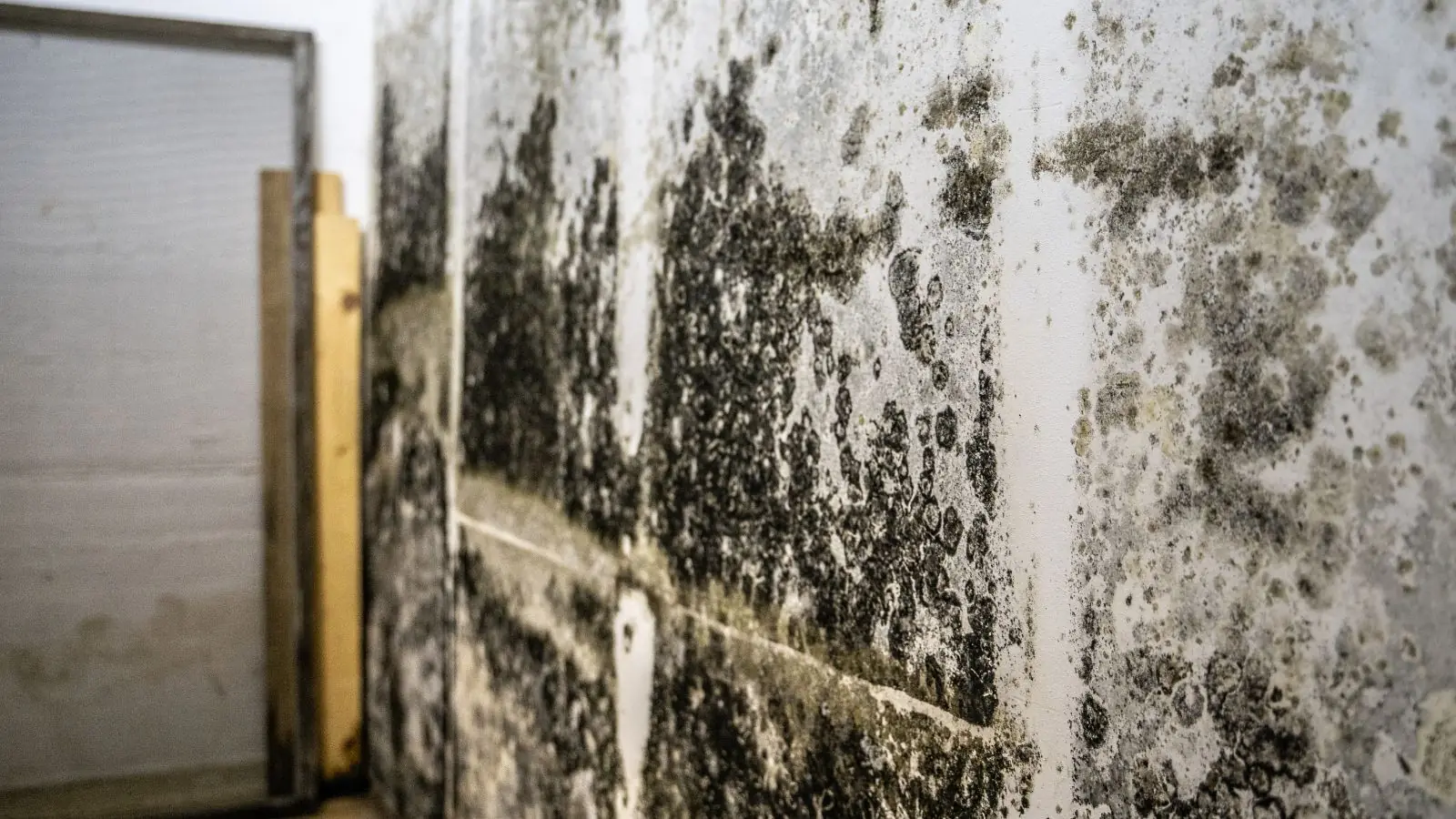
The way to get rid of basement mold is to remove the moisture first and the mold second. Mold needs a damp surface to grow, so cleaning without fixing the cause gives you a clean wall for a few weeks and a fresh patch afterward. In a Danvers basement, the cause is usually humidity, a drainage problem outside or a leak.
This guide is about moisture control. If you want the material-by-material cleaning steps, the mold remediation page explains how a crew contains and removes mold, and water mitigation explains how a wet basement is dried.
Find Out Why It Is Damp
A basement can be damp for four common reasons. Warm humid air in summer meets cool concrete and condenses. Gutters and downspouts dump water beside the foundation. Groundwater pushes moisture through the slab or the wall. A pipe, a washing machine hose or a water heater leaks.
You can test for each. Tape a square of plastic wrap to a bare wall and check it after two days. Moisture on the room side points to condensation, and moisture under the plastic points to water moving through the wall.
| Clue | Likely moisture source | Fix to try first |
|---|---|---|
| Walls sweat in summer | Humid air condensing on cool surfaces | Dehumidifier set around 50 percent humidity. |
| Wet after heavy rain | Poor drainage outside | Clean gutters, extend downspouts, regrade soil. |
| Constant dampness on one wall | Groundwater through the wall | Drainage specialist, then restoration. |
| Wet near pipes or appliances | A leak | Repair the line, then dry the area. |
| Musty smell, nothing visible | Hidden moisture behind finishes | Moisture meter survey. |
Dry It and Keep It Dry
Run a dehumidifier
A dehumidifier sized for the room, emptied or drained to a sink, keeps humidity near 50 percent. A hygrometer tells you if it is working.
Move air
Fans help dry walls and floors, and moving boxes off the floor lets air reach the surfaces.
Fix the outside
Gutters, downspouts and soil that slopes toward the house send water to the foundation. Fix those before spending money inside.
Clean after drying
Wash small hard-surface patches with detergent and water, let them dry and check them again a week later.
What to Remove Instead of Clean
Porous materials hold mold below the surface, so stained drywall, carpet and cardboard boxes usually go in the trash instead of being cleaned. Concrete, block and metal clean well. Wood framing can often be cleaned and dried if it was not wet for long.
EPA guidance treats a patch of about ten square feet or less as something a homeowner may handle, with gloves and a mask. Larger growth, mold inside finished walls or growth after sewage or flood water should go to a trained crew.
Seasonal Habits That Keep a Basement Dry
Basements follow the calendar. In summer, warm air carries moisture that condenses on cool block and concrete, so the room feels damp even with no leak. In spring, snowmelt and heavy rain push water toward the foundation. In winter, a closed house with little ventilation holds humidity from laundry, cooking and showers.
A simple habit for each season helps. Run a dehumidifier from late spring through early fall. Walk the outside of the house after every big storm and look for pooled water. In winter, vent dryers outdoors and check that no vent is blocked by snow.
Storage Choices That Help or Hurt
Cardboard boxes stacked against a wall act like a sponge. Plastic bins on metal shelves, held a few inches off the floor and away from the wall, let air circulate and make a leak easier to spot. Keep paper records and photographs upstairs, since they are the items most likely to be lost to dampness.
Check behind stored items twice a year. A patch that begins in a hidden corner can reach a large size before anyone sees it.
When to Call: Signs the Basement Needs a Crew
Call a crew when the basement flooded or growth covers more than about ten square feet. Call when you smell mold but cannot see it, or when finished walls, carpet or insulation stayed wet for a day or two. Those situations involve hidden material that a homeowner cannot reach safely.
It also makes sense to call if you rent or manage the property, if an insurance claim is involved or if anyone in the household is worried about exposure. The crew handles the building side, and your physician is the right person for any health question.
A Short Plan You Can Follow This Weekend
- Saturday morning: tape plastic to a bare wall and check outside gutters and downspouts.
- Saturday afternoon: set up a dehumidifier and a hygrometer, and clear items off the floor.
- Sunday: clean small hard-surface patches and bag soft damaged items.
- Next week: recheck the plastic wrap, the hygrometer and the cleaned spots, and call for help if anything has returned.
Call the dispatch line for an inspection with a moisture meter. A crew explains the findings and the scope before work starts.
Danvers Local Note: Rivers, Tides and Flood Maps
Danvers has the tidal Danvers River on the southeast side and the Ipswich River on the western border. The town describes itself as coastal with many properties in flood zones and adopted a revised Floodplain Bylaw at its February 2025 Special Town Meeting.
A basement near either river can take water that a basement on a hill never sees. Check your address on the FEMA Flood Map Service Center, and ask your insurer about flood coverage, since the Massachusetts Division of Insurance states that standard homeowners policies do not cover flood damage.
Sources: Town of Danvers resilience site, FEMA Flood Map Service Center and Massachusetts Division of Insurance (municipal, federal and state sources).
When to Call
Call when mold covers more than about ten square feet, when you smell it but cannot find it, or when the basement flooded. Homes in Salem and Peabody near tidal water and brooks often need the water handled before the mold can be.
Questions about health and mold belong with your physician, and the crew handles the water and the materials.
Questions About Basement Mold
Many guides suggest keeping indoor humidity around 30 to 50 percent. A basement hygrometer costs little and tells you whether your dehumidifier is keeping up.
Paint does not fix moisture, and it can trap damp behind it. Dry the wall first, then consider a coating if the surface is sound.
The steps are the same, but check your FEMA flood zone and ask about flood insurance. If water came from outside, treat it as Category 3 and let a crew handle removal.
A musty smell with no visible growth, a wall that feels cool and damp or paint that bubbles are signs. A moisture meter or thermal camera survey finds hidden damp without cutting open the wall.