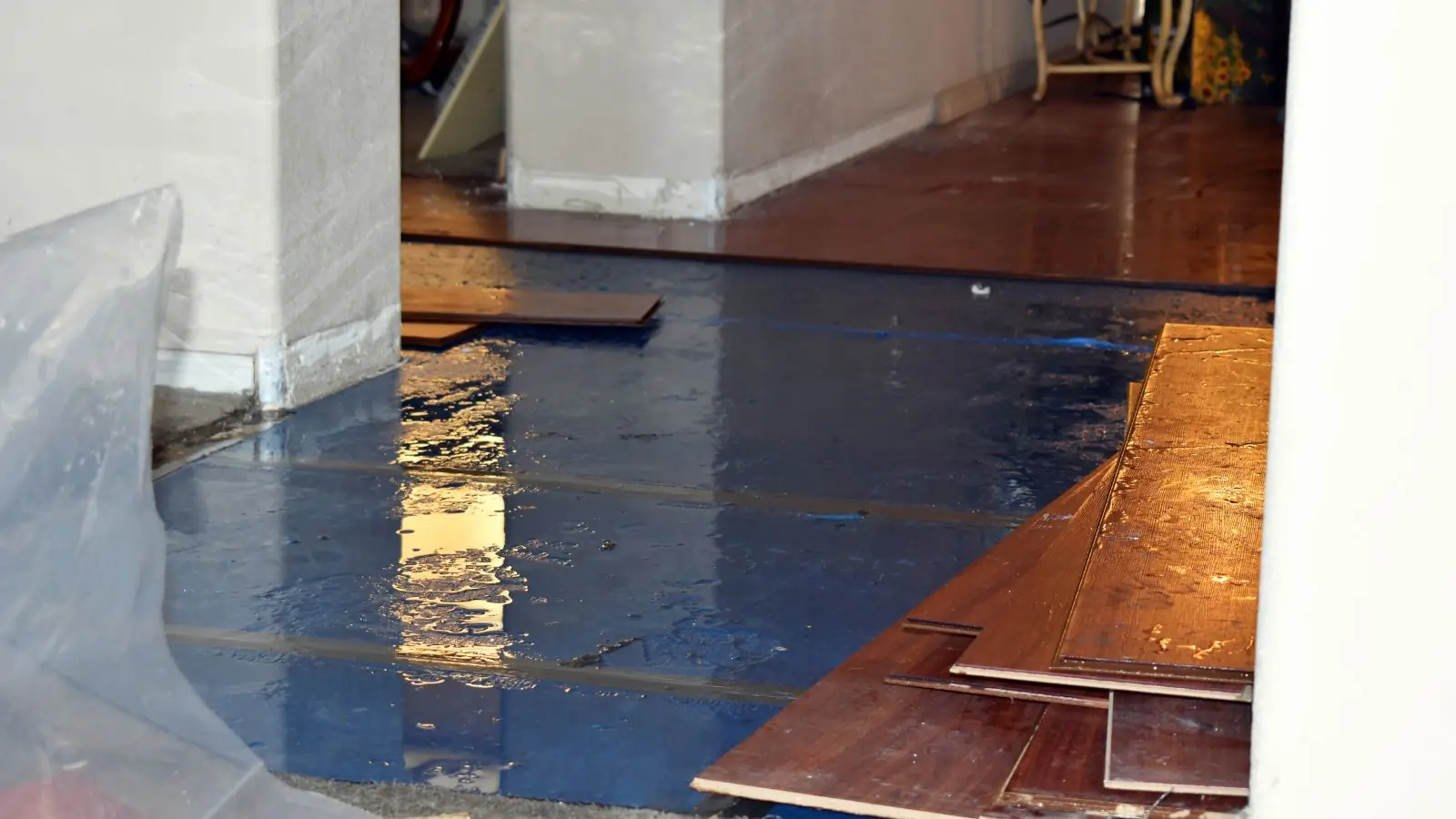
Hardwood floors can often be saved if they are dried quickly and slowly. Boards absorb moisture, swell and cup, and many return close to flat as they dry. Floors that stay wet for days, or that were soaked by sewage or floodwater, are more likely to need replacement.
This guide explains how to read the damage and what the repair involves. The drying side is covered under water mitigation, and finishing and replacement fall under water damage repair.
Read What the Boards Are Telling You
| Sign | What it suggests | Usual next step |
|---|---|---|
| Edges higher than the center (cupping) | Moisture absorbed from below | Dry slowly, then reassess after weeks. |
| Center higher than edges (crowning) | Often follows cupping after drying or sanding | Wait, then sand if needed. |
| Gaps between boards | Boards shrank after drying | Monitor, fill or refinish later. |
| Black stains or dark rings | Prolonged moisture or finish failure | Sand and bleach if shallow, replace if deep. |
| Soft or spongy boards | Wood fiber has broken down | Replace affected boards. |
| Buckled boards lifting off the subfloor | Heavy moisture, glue or nail release | Remove and replace, dry subfloor. |
What to Do in the First Two Days
Stop the water
Fix the leak and remove standing water. Wet vacuums help, and so does lifting rugs and furniture off the wood.
Move air gently
Run fans and open windows if outdoor humidity is lower, or use a dehumidifier. Keep dehumidifiers running through the weeks.
Do not use heat
Strong heat can crack boards. Dry in a controlled way, not with heat guns or high heat settings.
Check moisture
A meter on the boards and the subfloor tells you if drying is working, and a crew can use specialized mats to pull moisture from wood.
Wait before refinishing
Sanding wet boards locks in problems. Wait until readings are dry and the floor has settled.
Solid, Engineered and Laminate Floors React Differently
| Floor type | How it reacts to water | Repair outlook |
|---|---|---|
| Solid hardwood | Swells, cups and can often recover as it dries | Often salvageable if dried promptly. |
| Engineered hardwood | Layers can separate and edges can lift | Depends on the wear layer and the glue. |
| Laminate | Core board swells and does not return | Usually replaced when wet through. |
| Site-finished wide plank | Moves more with moisture changes | Slow drying, then refinishing. |
How Long Recovery Takes
Drying a floor is measured in days, but settling is measured in weeks. A floor that looks flat on day five can shift again as the last moisture leaves the core of the boards. That is why professionals hold off on sanding and finishing until readings stay steady over several visits.
Plan for the wait. Keep rugs off the area, keep humidity steady and avoid dragging heavy furniture across the boards while they are still moving. Patience here often saves a floor that rushing would have ruined.
When to Stop Waiting and Call a Pro
If boards are lifting off the subfloor, if you can see dark staining spreading between boards or if the floor feels spongy underfoot, further waiting will not help. Those signs mean moisture is trapped or fibers have broken down.
A professional can pull a small test section, check the subfloor and tell you whether the rest of the floor can be saved. Having that answer early lets you plan for sanding or replacement instead of guessing for weeks.
What to Do Today if the Floor Is Wet
- Remove standing water with towels, a mop or a wet vacuum.
- Lift rugs, mats and furniture so air reaches the boards.
- Run a dehumidifier and fans, and keep the room closed so the dehumidifier works efficiently.
- Leave blue tape or pencil marks on the worst boards and photograph them daily.
- Do not cover the floor with plastic, and do not nail or staple down lifting boards.
These steps buy time without making anything worse. Then call for a moisture reading to decide whether the floor can dry in place.
A Note on Finishes and Stains After Drying
Once the floor is dry and flat, the finish may still show white haze, dark rings or raised grain. Light haze in the finish can sometimes be buffed out, while dark stains in the wood itself usually need sanding or board replacement.
Professional drying follows ANSI/IICRC S500, which calls for monitoring readings until materials reach a dry standard. Ask the refinisher to test a small, hidden spot first. A sample shows how the wood takes stain and how much of the damage lifts with sanding, which makes the decision about patching versus replacing much easier.
Call the dispatch line. A crew can start drying and tell you honestly whether the floor looks salvageable.
Dry in Place or Replace?
A floor that was wet briefly and is dried within a few days is a good candidate for drying in place. A floor with finished, glued or engineered planks reacts differently from solid planks, and some engineered products cannot be saved at all.
A flooring professional can say whether boards will return to flat. Waiting a few weeks after drying is often the right call, since cupping can ease with time. If boards stay raised, sanding and refinishing is the next step, and replacement of affected sections follows if damage goes beyond the finish.
Danvers Local Note: Repair, Permits and Older Homes
The Danvers Inspectional Services office enforces the Massachusetts State Building Code and issues permits for construction, alteration and repair. Replacing a few boards usually does not trigger a permit by itself, but repairs that expose the subfloor and framing, plumbing or wiring may.
Danvers includes older neighborhoods such as Danvers Center and Tapleyville, where original wide-plank floors may be present. If you suspect a floor is original, ask a flooring specialist about matching species and width before deciding on replacement.
Sources: Danvers Inspectional Services page (municipal source) and Wikipedia on Danvers villages (reference source).
What a Repair Scope Should Say
- Which boards come out, and how they will be matched in species, width and finish.
- Whether the subfloor needs drying or replacement, and how readings prove it.
- Whether the whole room is sanded and refinished or only a patch.
- How long the floor needs before furniture returns.
Floors in Topsfield and Peabody homes behave the same way. The key points are speed of drying, species and the water source.
Questions About Hardwood Water Damage
Often, if it dries slowly and fully. Many floors improve over weeks, so waiting before sanding is usually wise. Persistent cupping can be sanded after readings are dry.
No. Too much heat can crack or split boards. Controlled drying with dehumidifiers and gentle airflow is safer.
Yes. Contaminated water is a higher category, and porous materials exposed to it are usually removed and replaced, even if they look fine.
Replacing a few boards usually does not, but repairs that expose framing, plumbing or wiring may. Ask Danvers Inspectional Services if you are unsure.