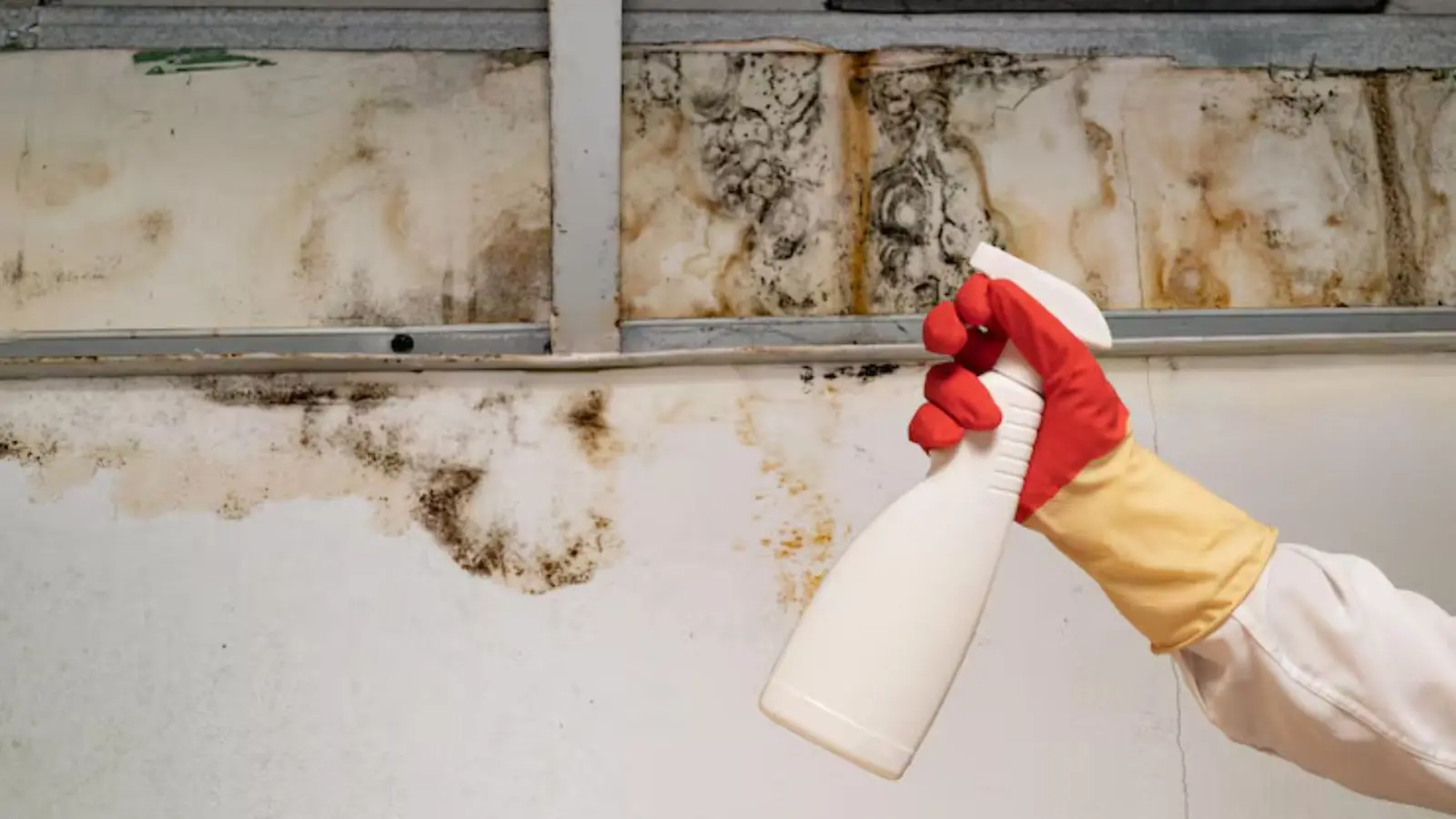
You get rid of ceiling mold by fixing the moisture, then cleaning or replacing the material it grew on. A small patch on a sealed, painted surface can often be cleaned with detergent and water. A patch on a soft or stained ceiling usually needs the drywall cut out. Either way, the leak or the humidity comes first.
This guide is about the cleaning side. The companion question of why the patch appeared is in the guide to tracing leaks under mold remediation, and what happens after the ceiling is cut out is covered under water damage repair.
Decide Whether to Clean or Cut Out
| What you see | Likely best step |
|---|---|
| Spots smaller than a hand on a painted ceiling | Clean with detergent and water, dry, monitor. |
| Stain with a brown ring and bubbling paint | Find the leak, assess drywall, likely cut out. |
| Soft, sagging or crumbling drywall | Cut out and replace, keep out from underneath. |
| Patches in more than one room | Have a crew inspect for a shared moisture source. |
| Growth across more than ten square feet | Trained crew with containment. |
According to EPA guidance, about ten square feet is the size where many homeowners can handle a job, with gloves, eye protection and a mask. Above that, or when the material is soft, a trained crew works with containment so spores do not spread to the rest of the house.
How to Clean a Small Patch
Fix the water first
Stop the leak or improve ventilation. If the cause remains, the patch returns.
Protect the room
Cover the floor, close the room door and keep fans off. Wear gloves, eye protection and a mask.
Clean gently
Wipe with a damp cloth and detergent solution. Do not scrub hard, spray heavily or sand the surface.
Dry thoroughly
Let the ceiling air dry, then check it with a moisture meter if you have one. Dispose of cloths in a sealed bag.
Recheck in a week
If the patch returns or the stain grows, the ceiling is still damp and needs a closer look.
Why Bleach Is Not the Answer
Bleach does not reach into drywall, so it can whiten the surface and leave the growth underneath. It also does nothing about the moisture that fed the mold. Detergent and water, followed by thorough drying, works on small hard-surface patches.
Never mix bleach with ammonia or other cleaners. If you are unsure, skip the chemicals and call for an inspection.
Protecting the Room While You Work
Working overhead puts debris at face level, so protection matters more on a ceiling than on a wall. Cover the floor and furniture with plastic, tape the plastic to the baseboard and close vents in the room so air does not carry dust through the ducts. Wear eye protection that seals around the eyes, gloves and a properly fitted mask.
Work from a stable ladder and keep your hands low where you can. Clean in small sections, and change cloths often so you are not dragging growth from one spot to another.
Signs You Should Stop and Call
- The drywall flexes or feels spongy when you press the cloth against it.
- Cleaning exposes a deeper stain, a hole or crumbling material.
- The growth is larger than expected, or you find more above or around it.
- Dust or debris starts falling from the ceiling.
- You are working near wiring, a light fixture or a ceiling fan box.
Any one of these means the job has changed. A crew can open the ceiling in a controlled way, check what is above it and close it again when readings are dry.
Preventing a Repeat Visit
After the ceiling is clean and dry, handle the cause. Add or repair a bathroom fan and make sure it vents outdoors. Seal gaps where warm air leaks into the attic and add insulation where it is thin. Fix flashing and roof leaks before the next storm.
Look at the ceiling again after the next heavy rain and the next cold snap. Catching a small change early is far easier than dealing with a second patch.
What to Do and What Not to Do
- Do wear gloves, sealed eye protection and a fitted mask, and ventilate the room.
- Do clean in small sections with damp cloths, and bag the cloths when you finish.
- Do not sand, scrape or blow air across dry growth, since that sends spores through the room.
- Do not mix bleach with ammonia or other cleaners.
- Do not stand under a sagging ceiling or push on it from below.
Following these basics keeps a small job small. The EPA guidance on mold in homes says the same thing in plainer terms: fix the moisture and clean or remove what is affected.
Call the dispatch line and describe what you see. A crew can inspect and explain the scope before work starts.
Danvers Local Note: Storm Roofs and Ceilings
The town's resilience plan lists intense storms as a physical climate risk for existing buildings, and storms are how many roof leaks begin. A ceiling patch that appears after a wet week is often a roof or flashing problem and not a cleaning problem.
If the ceiling has been wet for more than a few days, start with a moisture reading and an attic inspection before any wiping. A roofer can fix the source while a restoration crew handles the damage below.
Source: Town of Danvers resilience site (municipal source).
When to Call
Call when the ceiling sags, when you see growth beyond a hand, when the patch comes back after cleaning or when you cannot find the water source. Neighbors in Beverly and Topsfield use the same line for the same reasons.
Questions about health and mold belong with your physician. The crew deals with moisture, containment and removal.
Questions About Ceiling Mold Cleanup
No. Paint over a damp, growing surface traps the moisture and the patch returns. Clean or remove the affected material, fix the moisture and let it dry before painting.
A fan in the room can help drying, but do not point it at active growth because that spreads it. Open windows when weather allows and run a dehumidifier.
If the drywall is soft, stained through or larger than a hand, yes. A crew can contain the area, cut out wet material and verify dryness, while a roofer fixes the leak.
That means moisture is still present. Look for roof flashing, a bathroom fan that vents into the attic, a plumbing leak above or condensation, and get a moisture reading.