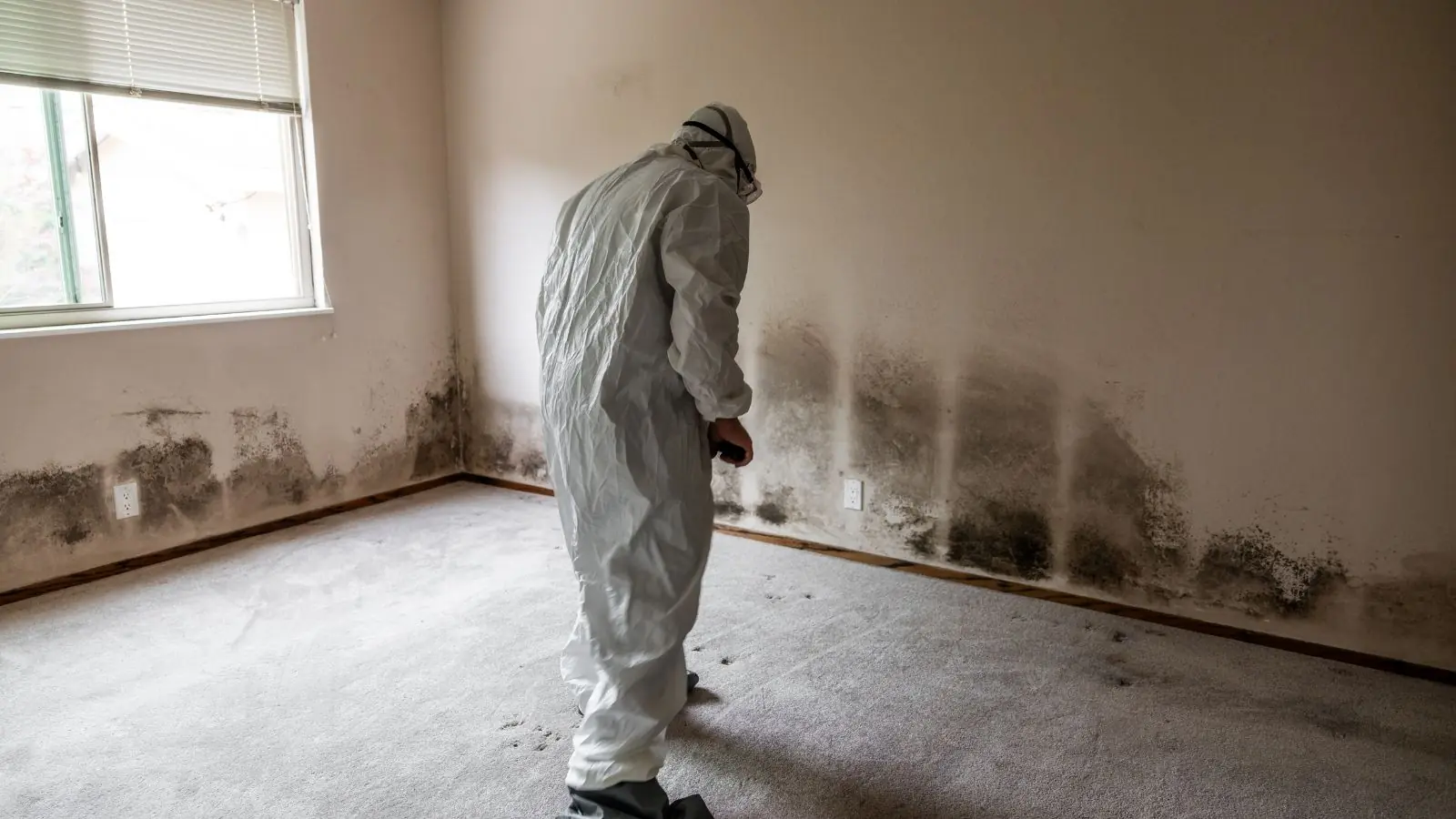
Treating basement mold works best as a sequence: stop the water, contain the area, remove what is affected, dry the space and verify the result. Skipping the first step makes the rest temporary, and skipping containment can spread spores through the house.
This guide explains each step and which parts a homeowner can handle. A trained crew works the same sequence on larger jobs, and you can read how that looks on the mold remediation page. If the basement also flooded, the water side is described under flood damage restoration.
Step One: Stop the Water
Mold grows where moisture lingers, so the first job is finding out why the basement is damp. The usual suspects are humid summer air, gutters that spill beside the foundation, groundwater and leaking pipes or appliances. Fix the cause or the treatment fails.
A moisture meter helps you see whether walls and framing are actually dry. Readings that stay high after the obvious fixes point to hidden water behind finishes or through the wall.
The Treatment Sequence
Contain
Close off the area, seal doorways with plastic and keep air from moving into the rest of the home. Trained crews use negative air machines for larger jobs.
Remove porous materials
Wet or moldy drywall, carpet, padding and insulation are bagged and removed. They cannot be reliably cleaned.
Clean salvageable surfaces
Concrete, block, metal and framing are cleaned with HEPA vacuuming and damp wiping. Dry brushing and sanding are avoided because they spread spores.
Dry
Dehumidifiers and air movers lower humidity and dry the surfaces. Readings are taken until they match dry reference points.
Verify
Check readings again after drying. Many crews also check for visible growth and odor before rebuilding.
| Material | Usually cleaned | Usually removed |
|---|---|---|
| Concrete and block | Yes | Rarely. |
| Wood framing | Often, if it dried quickly | If soft or deeply stained. |
| Drywall | No | Yes. |
| Carpet and padding | No | Yes. |
| Cardboard boxes and paper | No | Yes. |
| Hard plastic and metal shelves | Yes | Rarely. |
What a Homeowner Can and Cannot Do
EPA guidance says that a patch of about ten square feet or less may be handled by a homeowner who wears gloves, eye protection and a mask. Larger growth, growth inside finished walls and any mold that follows sewage or floodwater should go to a trained crew.
Do not mix cleaning chemicals, and do not use fogging or paint as a substitute for removal and drying. Questions about health and mold belong with your physician, and the crew deals with the building materials and the moisture.
Tools and Protection for Small Jobs
For a small, hard-surface patch, the kit is simple. You need disposable gloves, sealed eye protection, a fitted mask, plastic sheeting and tape, heavy trash bags, a bucket of detergent solution and clean cloths. A HEPA vacuum is helpful for dust, while an ordinary vacuum tends to blow fine particles back into the room.
Set up a path out of the basement that does not cross finished living areas. Bag material in the basement, seal the bag and carry it straight outdoors. Wash your hands and change clothes before you go upstairs.
Signs the Job Is Bigger Than It Looks
- Growth continues behind or below the first area you clean.
- Wall or flooring material is soft, crumbly or peeling away.
- Baseboards or paneling hide a wide stain once removed.
- The musty smell stays after you remove the visible patch.
- A second room or the floor above shows new stains.
When any of these show up, stop and call. A crew has the containment gear to open a wall safely, and the dispatcher can tell you what to expect before anyone arrives.
Choosing a Company for Larger Jobs
For a larger basement job, ask the company to describe its containment plan, how it filters air and how it will confirm the work is finished. Ask whether it follows the ANSI/IICRC S520 standard for mold remediation, and ask for a written scope that lists what will be removed.
Be cautious of anyone who proposes only spraying or fogging without fixing the moisture source. A sound plan always includes removal, drying and a way to check the result.
What to Do Once the Work Is Finished
After treatment, keep the basement dry for several weeks before rebuilding. Check humidity daily at first and keep the dehumidifier running. Look at the treated areas after each rain and each humid spell, and photograph any change.
If you plan to finish the basement, ask the crew or your contractor about moisture-resistant materials and about leaving access to plumbing and the foundation. Finishing over a damp wall puts the problem back behind a new surface.
Common Mistakes in Basement Treatment
- Treating the growth while a leak or drainage problem continues.
- Running a fan across active growth, which spreads it.
- Painting or sealing over damp walls.
- Keeping soft materials that were wet for days.
- Skipping the follow-up readings after drying.
Call the dispatch line and describe what you see. A crew explains the containment plan and the scope before any work starts.
Danvers Local Note: Water Supply and Basement Moisture
The Danvers DPW Water Division supplies drinking water to Danvers and Middleton, with about 12,540 connections and two wells off Route 114 among its sources. A water service line or main is a public matter up to the meter, while plumbing inside the house is private.
Basement finishing, framing and electrical work are subject to the Massachusetts State Building Code, which Danvers Inspectional Services enforces. Ask the office before you close up a wall or replace framing.
Sources: Town of Danvers Water Supply page and Inspectional Services page (municipal sources).
After Treatment: Keeping It Away
- Keep humidity near 50 percent with a dehumidifier and a hygrometer.
- Store items on shelves, not directly on the floor or against walls.
- Keep gutters clear, and send downspouts well away from the foundation.
- Check for new stains after heavy rain or humid weeks.
Basements in Middleton and Beverly deal with similar seasonal moisture, and the same crew covers both towns. If a patch comes back after treatment, the cause is still present and needs another look.
Questions About Treating Basement Mold
Vinegar can clean a small, hard surface, but it does not remove growth from porous materials and it does nothing about moisture. Dry the area and remove soft materials that have grown mold.
Not everything. Hard items like plastic and metal can be cleaned. Cardboard, paper, carpet and soft furnishings with growth are usually discarded.
By containing the work area with plastic barriers, using HEPA filtration and negative air machines, and bagging material before it leaves the space.
Moisture readings return to dry levels, visible growth is gone, odor is gone and no new staining appears over the following weeks.