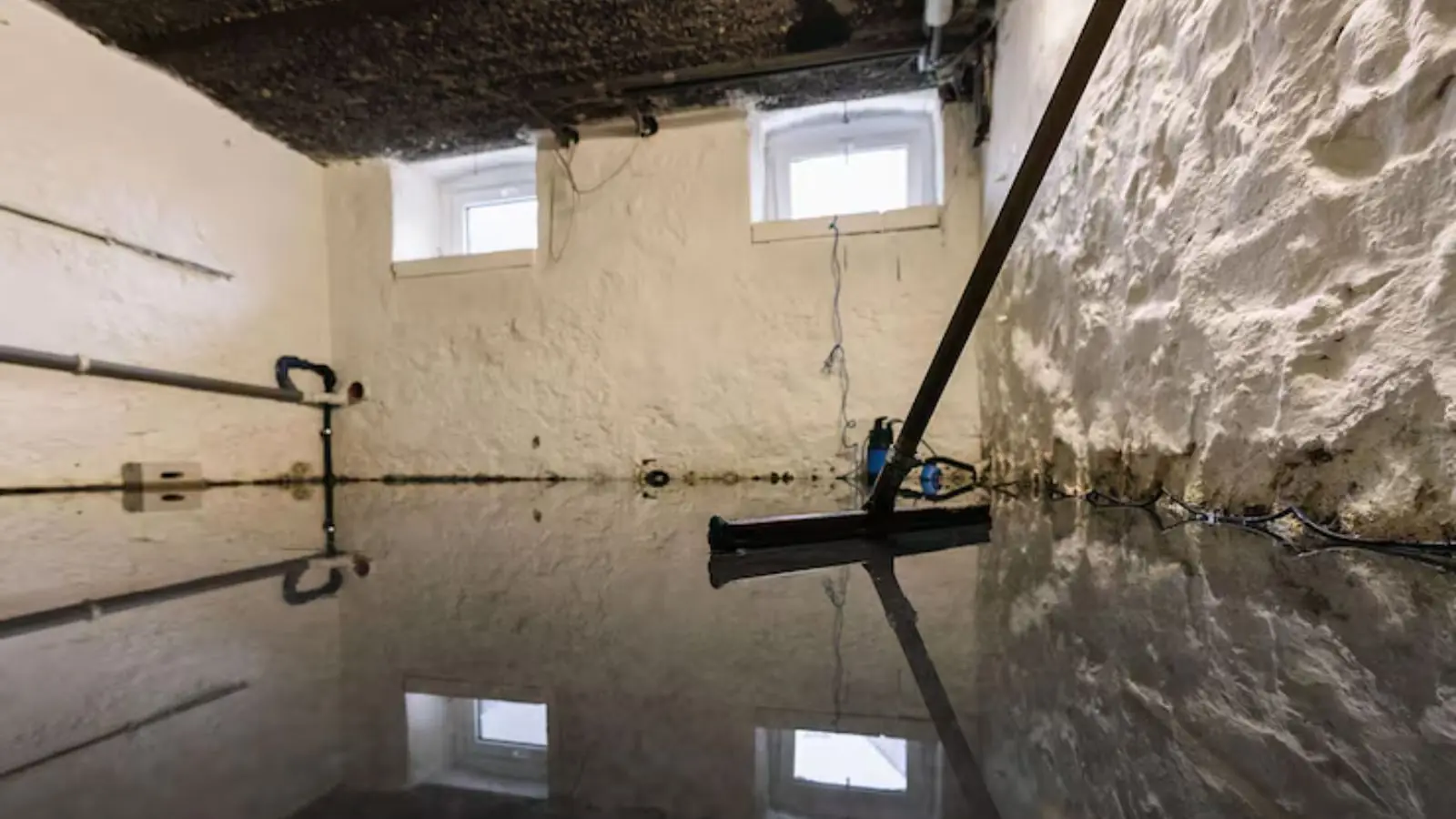
A wet basement needs three decisions made quickly: what kind of water it is, whether the space is safe to enter and how fast it can be dried. Clean supply water from a broken pipe is handled differently from groundwater or sewage, and the difference decides whether you clean it yourself or call a crew with protective gear.
This guide covers the common sources of basement water in Danvers and the first steps. Water removal is described under emergency water removal, and the larger recovery is covered under flood damage restoration.
What Kind of Water Is It?
| Source | Category | First move |
|---|---|---|
| Broken supply line or water heater | Clean at first, can degrade within a day or two | Shut off supply, remove water, dry fast. |
| Washing machine or dishwasher overflow | Clean to gray | Shut off, remove water, dry. |
| Sump pump failure or groundwater | Treated as contaminated by many crews | Stay out if electrical risk, call a crew. |
| Sewer or drain backup | Contaminated | Do not touch, call a crew. |
| River or storm flooding | Contaminated | Stay out, call a crew, call your insurer. |
Safety Before Cleanup
Standing water in a basement can hide electrical hazards. If water is near outlets, a panel, a furnace or a water heater, do not step in until power is shut off by a qualified person. Do not use ordinary vacuums on water, and do not enter a basement with rising water.
Wear boots, gloves and eye protection for anything beyond a clean-water leak, and keep children and pets out.
Make it safe
Turn off power to the area only if you can do so from a dry spot, or call your utility or an electrician.
Stop the source
Shut off the supply line or the machine. For groundwater, you cannot stop it, so focus on removal.
Photograph
Take photos and video of the water level, the damage and the source before you move things.
Remove water and wet contents
A crew uses pumps and extractors, and moves items to a dry area.
Dry and monitor
Dehumidifiers and air movers run until readings return to dry reference points.
What Gets Moved and What Gets Left
Move the items that can be saved and that are safe to carry. Photographs, important papers, electronics and small valuables go upstairs first. Heavy furniture and appliances can wait for the crew, who have the equipment to move them without injury.
Porous items that sat in contaminated water, such as carpet, mattresses and upholstered furniture, are usually discarded. Photograph each one before it goes, because the photos support an insurance claim and the list helps with replacement.
Drying a Basement Is Slower Than You Expect
Concrete and block hold water and release it slowly. A basement that feels dry after a few days can still have moisture in the walls and the slab. Crews run dehumidifiers and air movers, check readings daily and adjust equipment until the numbers match dry reference points.
The equipment can be loud and runs around the clock. Expect to share the house with it for several days, and ask the crew when readings are expected to reach their target so you can plan around it.
Preparing for the Next Storm
Once the basement is dry, look at what let the water in. Consider a battery backup for the sump pump, a water alarm near the pit and a plan for where valuables are stored. Clear gutters and extend downspouts before the next heavy rain.
Check your insurance as well, including flood and water backup coverage, so you know where you stand before the next storm and not afterward.
When to Call a Crew Right Away
Call right away if the water is deeper than a few inches, if it is rising, if it came from outside or a drain or if the electrical panel or furnace is near the water. Call if you are not sure what kind of water it is. Each of those means the job needs pumps, protective gear and an assessment of the building.
Do not wait for an insurance adjuster before calling. A crew can start removal and document what it finds, and your insurer will want to see how quickly you acted.
A Short Note on Sump Pumps and Backups
A sump pump is the first line of defense for many basements, and it works only when it has power and a clear discharge line. Test the pump by pouring a bucket of water into the pit a few times a year and check that the float rises and the pump clears it.
A battery backup keeps the pump running during an outage, and a high-water alarm gives you warning if the pump fails. Neither is a guarantee, so keep valuables off the floor and know where your insurance coverage begins and ends.
Call the dispatch line now. A crew can start removal and drying and explain the safe next steps.
Danvers Local Note: Rivers, Tides and the 2006 Flood Declaration
The tidal Danvers River forms on the southeast side of town from the Porter, Crane and Waters rivers, and the Ipswich River runs along the western border. The town describes itself as coastal with many properties in flood zones, and it revised its Floodplain Bylaw at a February 2025 Special Town Meeting.
FEMA-1642-DR, the federal declaration for storms and flooding that began on May 12, 2006, put Essex County in line for Individual Assistance. Standard homeowners policies do not cover flood according to the Massachusetts Division of Insurance, so check your declarations page and ask about flood and water backup coverage.
Sources: Town of Danvers resilience site, Wikipedia on Danvers geography, Federal Register FEMA-1642-DR notice and Massachusetts Division of Insurance (municipal, reference, federal and state sources).
What Not to Do
- Do not wait to see if it dries on its own. Materials begin to degrade and mold can start within days.
- Do not use household fans alone on a flooded basement. Water must be removed first.
- Do not throw out damaged items before photographing them.
- Do not mix floodwater cleanup with bare hands or no protection.
Basements in Peabody and Beverly near brooks and rivers see similar patterns, and the same crew handles them. After the water is out and the space is dry, water damage repair covers the rebuild.
Questions About Basement Water Damage
As soon as it is safe. Water spreads into materials quickly, and mold can begin within a few days, so removal and drying should start within the first day.
Not until you know electricity is off to the area. Water can also be contaminated, so boots and gloves are the minimum protection.
Insurers often treat it as a water backup or sump failure issue, which standard policies exclude without an endorsement. Check your policy and ask your agent.
Yes. Describe the situation by phone, and the crew can advise on safety and assess the water category on arrival.