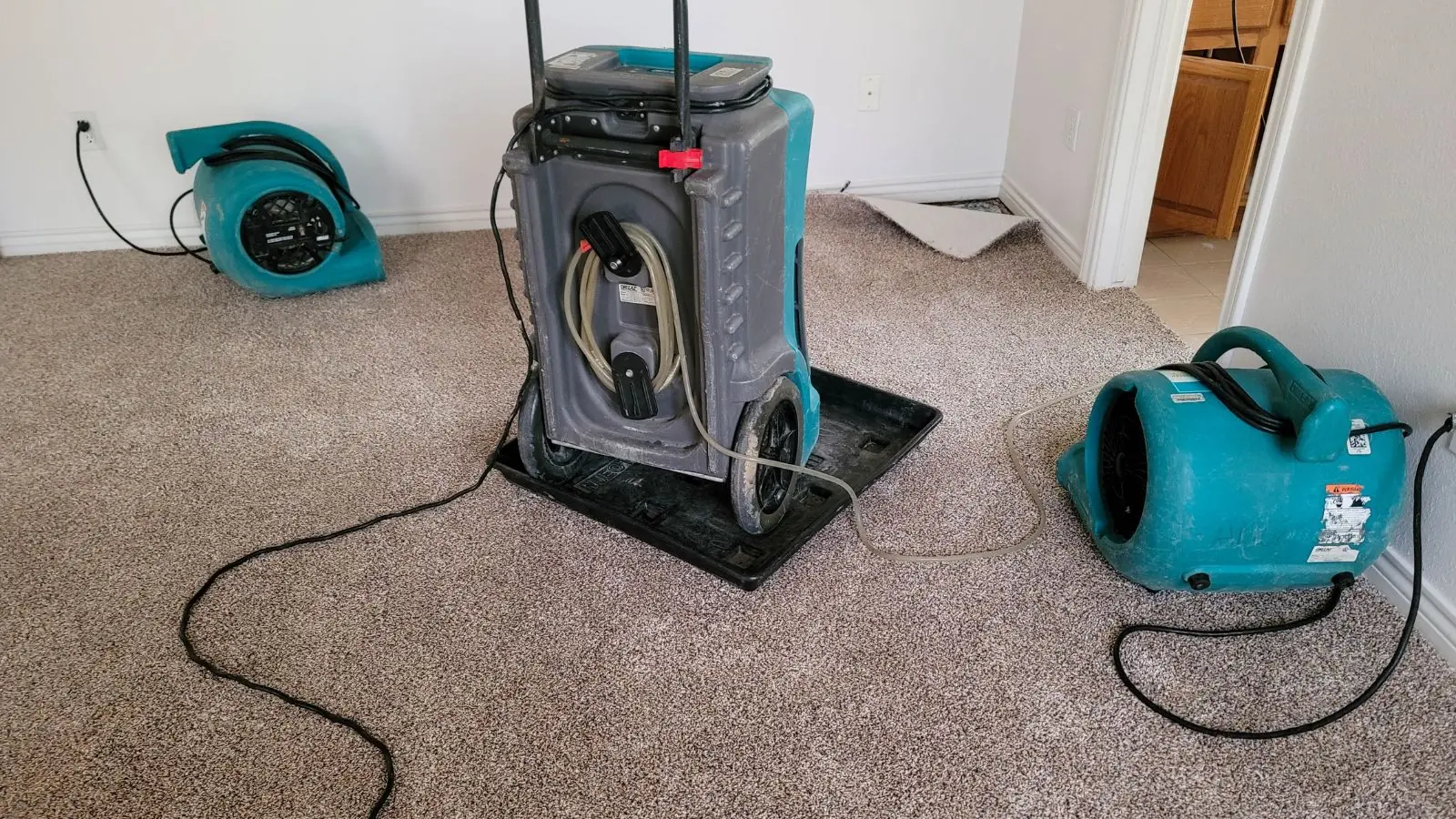
Water damage restoration cost in Danvers depends on five things: the category of the water, the area affected, the materials involved, how many days of drying are needed and how much needs to be rebuilt. Two houses with the same leak can have very different bills for those reasons.
This article does not quote dollar amounts, because a figure without an inspection is a guess. It explains how bills are built so you can read an estimate with confidence, and it lists the questions that make estimates comparable.
The Five Cost Drivers
| Driver | What it means | How it moves the bill |
|---|---|---|
| Water category | Clean supply water, gray water or sewage and floodwater | Higher categories need protective gear and more removal. |
| Affected area | Square footage and number of rooms that read wet | More area means more crew time and more equipment. |
| Materials | Carpet, drywall, plaster, hardwood, tile, insulation | Dense materials dry slowly, porous ones are often replaced. |
| Drying days | How long equipment runs until meters read dry | Each day adds equipment and monitoring. |
| Rebuild scope | What must be replaced and finished | Often the largest part of the final total. |
The first four drivers belong to mitigation and cleanup, which happen right after the loss. The fifth belongs to repair, which comes after the structure is dry. Many homeowners are surprised that the rebuild can outweigh the emergency work.
Why a Written Scope Matters
A written scope lists what will be removed, dried, cleaned and rebuilt, room by room. It lets you compare two estimates fairly, because a low price that skips drying is not the same as a higher price that includes it.
Ask for the scope before work starts, and ask which items are fixed and which depend on readings. For example, the number of drying days is an estimate until the meters confirm dry. Scope and price should both be explained to you in plain language.
Questions That Make Estimates Comparable
Ask every company the same things
- What water category is this, and how was it decided?
- How many rooms and how many square feet are in the scope?
- Which materials are being removed and which are being dried in place?
- How many drying days are planned, and how will you prove it is dry?
- Is the rebuild included, or priced separately after drying?
- Which permits does the work need, and who pulls them?
Phases of a Job and Who Does What
A typical loss moves through emergency response, drying, cleanup and reconstruction. Emergency response stops the spread, drying brings readings down to a dry standard and cleanup removes what cannot be saved. Reconstruction puts the building back together. Each phase can have its own line items, and each can be done by a different company.
Some homeowners hire one company for everything. Others hire a restoration company for the first three phases and a general contractor or flooring specialist for the rebuild. Both approaches work, but the scope should state where one phase ends and the next begins, so nothing is billed twice or left out.
Where Estimates Often Go Wrong
- Drying is priced as a flat number with no mention of how readings will prove it is finished.
- Demolition is listed without a rebuild line, so the homeowner discovers a second bill later.
- Contents handling, such as moving and storing furniture, is left out of the scope.
- Hidden damage found after walls are opened is not covered by any plan for an updated estimate.
- Permits and inspection timing are missing from both the price and the schedule.
A good scope names these items even when the answer is that they do not apply. A blank line is easier to question than an item that was never mentioned.
How Drying Standards Shape the Scope
Professional crews work from the ANSI/IICRC S500 standard for water damage restoration. It sorts water into categories and losses into classes, and those labels drive how much equipment is placed and how long it runs. A class 2 loss that wets whole rooms of carpet and wall bases calls for more drying capacity than a class 1 loss confined to a small area.
You do not need to memorize the classes. Ask the crew to tell you which category and class it assigned and why, because that answer explains a large share of the equipment and labor in the estimate.
Keeping a Cost Log During the Job
Keep a simple log of what the crew does each day, what equipment is on site and what readings were taken. Ask for a copy of the final moisture log and the equipment list. These records help you check the invoice and support any insurance claim.
If the scope changes, ask for the change in writing before the extra work happens. A written change order protects you and the contractor from disagreements about what was agreed.
Call the dispatch line and ask for an inspection. Scope and price are explained before work starts.
Danvers Local Note: Who Handles What
The town DPW Water Division supplies drinking water to Danvers and Middleton and serves about 12,540 connections. A main break in the street belongs to that division, while a burst line inside your house is your responsibility, so a restoration bill only covers the damage on your side of the line.
Repairs that involve structure, wiring or plumbing are reviewed by Danvers Inspectional Services under the Massachusetts State Building Code. Permit fees and inspection timing are separate from the restoration price, so ask the contractor to list them in the scope.
Sources: Town of Danvers Water Supply page and Inspectional Services page (municipal sources).
Insurance and the Cost Conversation
Sudden and accidental water damage is often covered by a homeowners policy, while gradual leaks and neglect often are not, and flood damage usually needs its own policy. The Massachusetts Division of Insurance says standard homeowners policies do not cover flood damage.
Your deductible, depreciation rules and coverage limits shape what you pay out of pocket. Ask your insurer how they handle each, and keep every photo, reading and invoice. The related guides to emergency water removal and water damage repair explain the two cost phases in more detail.
Nearby Towns, Same Cost Logic
The same drivers apply across the North Shore. Homeowners in Peabody and Topsfield read the same moisture meters and the same scopes, even though the water, the housing and the access differ.
Questions About Restoration Cost
Because the price depends on what the meters find, such as how many rooms are wet and what category the water is. A phone quote is a guess, and a guess can leave out drying or rebuild work.
It varies by loss. The rebuild can be the larger portion when finishes, flooring or cabinets are replaced, which is why a scope that separates the two phases is useful.
Ask the company. Some jobs involve pulling a crew outside normal hours, and the scope should say whether that affects price.
The town DPW Water Division handles the public main. Damage inside your home is usually a matter between you, your insurer and any party responsible, so ask your insurer how to proceed.