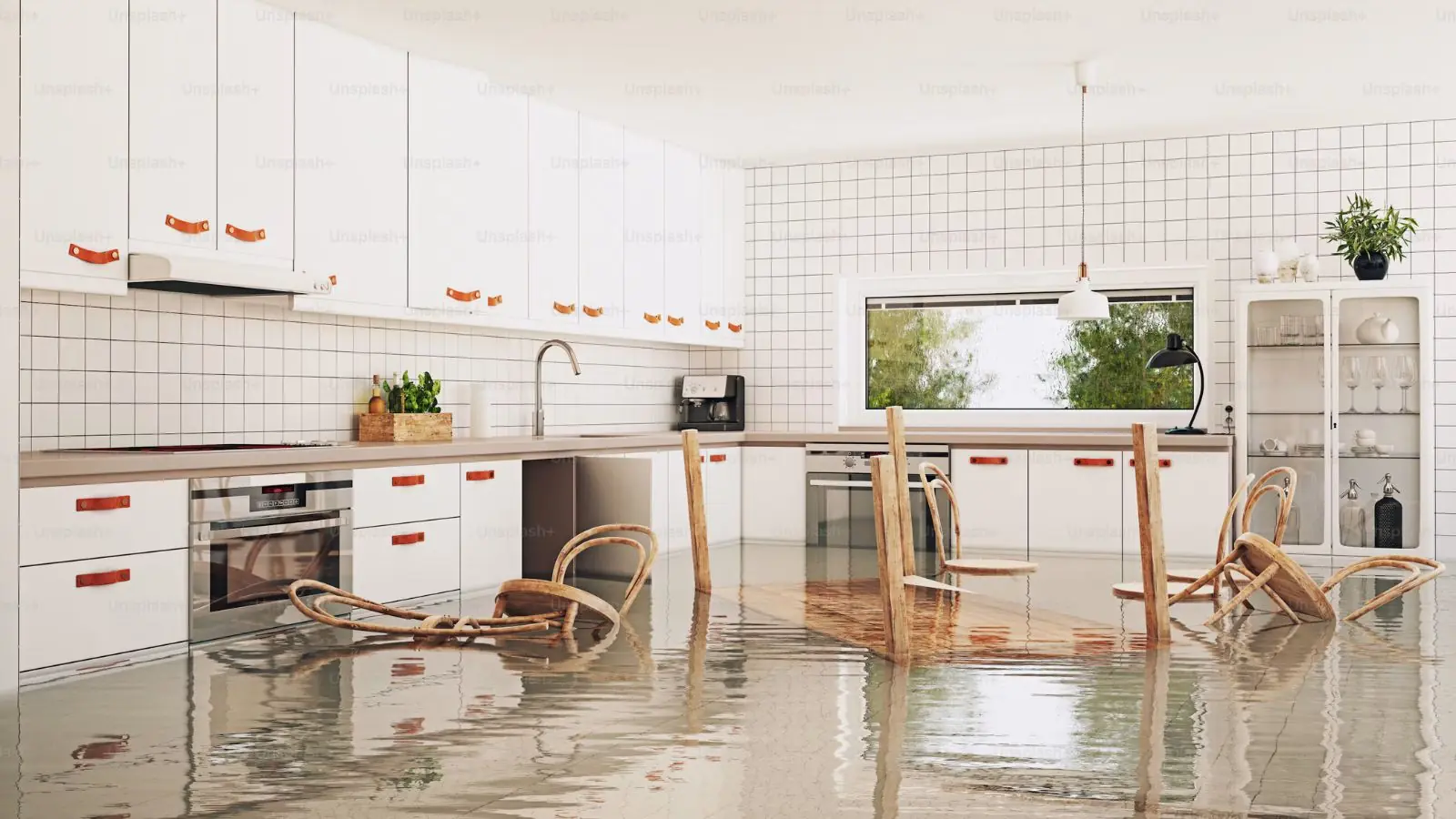
Homeowners insurance often covers water damage that is sudden and accidental, such as a burst pipe or a failed supply line. It often does not cover damage from slow leaks, poor maintenance or flooding. The Massachusetts Division of Insurance says standard homeowners policies do not cover flood, and that water backup and sump pump failure are usually covered only by an added endorsement.
Your policy wording decides your claim, and this article is not legal or insurance advice. It explains how the common situations tend to be sorted so you can ask better questions. For the drying and cleanup steps that insurers expect, see water damage cleanup and emergency water removal.
How Cause Sorts a Claim
| Situation | Commonly covered? | What to check in the policy |
|---|---|---|
| Burst pipe or failed supply line | Often yes if sudden and accidental | Named perils, deductible, exclusions for neglect. |
| Appliance hose or water heater failure | Often yes for the water damage, not the appliance | Appliance exclusions and wear language. |
| Slow leak over weeks or months | Often no | Gradual damage and continuous seepage exclusions. |
| Sewer or drain backup, sump failure | Only with an endorsement | Water backup endorsement and its limit. |
| Rising water from a storm or river | Not under standard homeowners | Separate flood policy, such as NFIP or private flood. |
| Roof leak after a storm | Often yes if the roof was sound | Roof age, wind or hail rules, maintenance language. |
Words like sudden, accidental, gradual, seepage and backup carry real weight in a claim. Read the exclusions section and the endorsements page, then ask your agent to explain anything unclear.
What an Insurer Expects You to Do
Stop the water and protect the property
Shut off the supply, move belongings and begin drying. Policies generally expect reasonable steps to prevent further loss.
Document before you clean
Take photos and video of the damage, the source and the affected items before anything is moved or thrown out.
Call your insurer promptly
Report the loss, get a claim number and ask what they need from you and what they want to see.
Keep records
Save invoices, moisture readings, drying logs and receipts for temporary housing or repairs.
Keep damaged items if asked
An adjuster may want to see or count items before disposal.
Reading Your Policy Without a Law Degree
Start with the declarations page, which lists coverage limits and the deductible. Then find the section that lists perils and exclusions. Look for phrases such as continuous or repeated seepage, wear and tear, neglect, flood and water backup. Each one narrows or removes coverage in a particular situation.
Next, read the endorsements. This is where water backup, sump pump overflow and similar protections appear. An endorsement may carry its own limit that is much lower than the main dwelling limit, so check the number as well as the name.
Mistakes That Complicate Claims
- Throwing out damaged items before photographing them or giving the adjuster a chance to look.
- Waiting weeks to report a loss that was obvious on day one.
- Letting a slow leak run, then reporting the damage as sudden.
- Signing a work authorization or a settlement before reading what it says.
- Assuming a restoration company will negotiate the claim for you.
Avoiding these does not guarantee coverage, but it keeps a claim from being weakened by avoidable problems. When in doubt, ask your insurer in writing and keep the reply.
When to Call Your Insurer and When to Call a Crew
Do both, and do them close together. A crew can begin stopping the loss from spreading while your insurer opens the claim. Policies generally expect reasonable steps to prevent further damage, so waiting for an adjuster to arrive before you begin drying can make the loss worse and the claim harder.
Tell your insurer what you are doing, take photos first and keep what the crew gives you. If the damage looks small, you may still want the claim number before you decide whether to file, since your insurer can explain how a claim would affect your policy.
Call the dispatch line. A crew can start removal and drying and give you documentation to share with your insurer.
Why Drying Records Help a Claim
A moisture log shows how wet each material was, what equipment ran and when readings reached a dry standard. That record explains why a crew removed some materials and dried others. Adjusters and homeowners both find a clear log easier to work from than a stack of unlabeled photos.
Do not assume the restoration company will deal with the claim for you. You remain the policyholder, and decisions about coverage belong to you and your insurer. Ask any company you hire to explain its documentation and what it can provide.
Danvers Local Note: Flood Zones and Coverage Gaps
Danvers calls itself a coastal town with many properties in flood zones, and it adopted a revised Floodplain Bylaw at its February 2025 Special Town Meeting. Tidal water on the Danvers River and the Ipswich River on the western border are the reason.
A broken pipe and a river overflow can look alike in a wet basement, but they are treated differently by insurance. Look at your declarations page to see whether you carry flood coverage, and ask your agent whether a water backup endorsement is attached. The FEMA Flood Map Service Center shows your zone by address.
Sources: Town of Danvers resilience site, Massachusetts Division of Insurance and FEMA (municipal, state and federal sources).
Questions to Ask Your Insurer
Bring these to the call
- Is this loss sudden and accidental under my policy wording?
- Do I have a water backup or sump pump endorsement, and what is its limit?
- What is my deductible for this type of loss?
- Do you pay on replacement cost or on depreciated value?
- What documentation do you need from a restoration company?
- How long will the claim review take, and who is my adjuster?
Homeowners in Peabody and Salem are in similar positions along tidal rivers and brooks, and the same questions apply. If the source was a pipe inside the house, start with the supply shutoff and move on to drying. If it was floodwater, the flood policy matters, and the cleanup needs trained crews with protective gear.
Questions About Water Damage Coverage
Standard homeowners policies do not cover flood, according to the Massachusetts Division of Insurance. Water backup may be covered by an endorsement, and rising water usually needs a separate flood policy. Check your declarations page and ask your agent.
Often not. Many policies exclude gradual or continuous leaks, so reporting and repairing small leaks early matters for both damage and coverage.
Policies generally expect reasonable steps to limit further damage. Document the damage first with photos and video, then begin removal and drying, and tell your insurer what you are doing.
No. You are the policyholder and deal with your insurer directly. A company can provide documentation such as moisture logs and invoices.